


 Subscribe
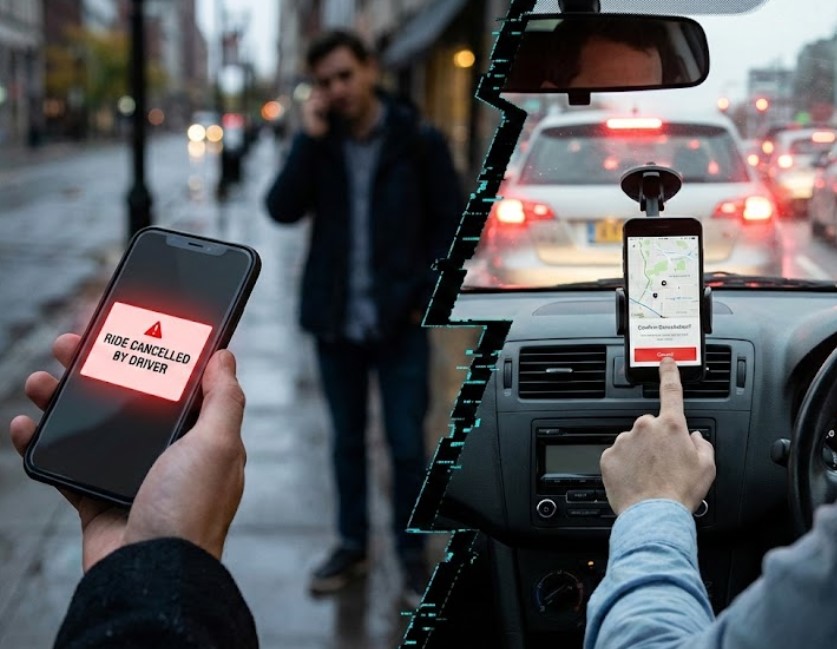
If you manage a taxi or ride-hailing operation, chances are you have already dealt with driver cancellations or no-shows more times than you would like.
A ride gets confirmed, the customer is waiting, and then the driver cancels or simply does not arrive.
What may look like a minor operational hiccup quickly escalates into customer complaints, refund requests, and a loss of trust in your service.
Over the past decade, app-based booking has made it easier than ever for customers to request rides. At the same time, it has made driver behaviour more difficult to monitor and control.
When drivers accept trips without real commitment or cancel them at the last minute, the consequences are rarely limited to that single ride. The pressure shifts to your dispatch team, while your brand reputation takes the hit.
When these situations happen repeatedly, they often reveal deeper issues. Gaps in driver management, unclear incentives, or limited insight into driver performance tend to surface through cancellations and no-shows.
For operators, this is no longer just a matter of customer experience. It affects daily operations, planning efficiency, and long-term revenue stability. Understanding why drivers cancel rides or fail to show up is the first step toward addressing the problem.
In this article, you will explore the most common reasons behind driver cancellations and no-shows, along with practical ways to reduce driver cancellations and build a more reliable, well-controlled service.
Driver Ride Cancellation and Its Impact on Customers: Statistics
Driver ride cancellations have a measurable and direct impact on how customers perceive taxi and ride-hailing services.
According to a survey conducted by LocalCircles, 79% of taxi app users identified driver cancellations as their main concern when using these platforms. This highlights how strongly cancellations affect overall customer confidence, often more than pricing or availability.
Additional research published on ScienceDirect supports this view. The study shows that rides canceled by the driver or the platform are perceived very negatively by travelers. It also points out that when a service is canceled after a booking has already been confirmed, passengers experience a significant sense of inconvenience and frustration. As a result, many users feel a strong motivation to switch to a different provider after such an experience.
Together, these findings underline a clear pattern. Driver cancellations do not just disrupt individual trips, they actively push customers away and weaken long-term loyalty.
Read also: Essential Dispatch Programs for Running a Successful Taxi Business
Real-Life Examples: How One Canceled Ride Ruins Everything
Imagine one of your customers is already running late for a job interview or trying to make it to an important meeting.
In that moment, timing matters far more than price. The customer books a ride, sees the driver is five minutes away, and decides to wait while watching the vehicle move on the map.
Five minutes pass. The customer checks again. The driver who was approaching earlier has suddenly stopped.
A few seconds later, the booking disappears. The driver has canceled the ride at the very last moment.
From the customer’s perspective, the reaction is immediate. Frustration sets in, followed by disappointment. Trust breaks in seconds.
And if this situation happened to you personally, there is a good chance you would not return to the same service again.
For you as an operator, however, the damage goes well beyond a single unhappy passenger.
This is where driver cancellations and driver no-shows begin to affect daily operations in a very real way.
Every failed pickup creates extra pressure on your dispatch team, increases the volume of inbound complaints, and often results in refunds or lost repeat bookings.
Over time, repeated incidents like this weaken overall driver performance and make it increasingly difficult to maintain a reliable service promise.
From a business perspective, the goal is not simply to accept more bookings. The real objective is to complete them consistently.
When ride failures become frequent, they usually point to gaps in driver management rather than isolated mistakes.
Understanding why drivers cancel rides or fail to show up is the first step toward closing those gaps and protecting your revenue.
So what actually causes drivers to cancel rides in the first place? Let’s look at the most common reasons.
Reasons Why Drivers Cancel Passengers’ Rides
There might be many reasons behind drivers canceling passengers’ rides, some valid and some less justifiable. Below are the main reasons why drivers cancel rides:
- Distance factor and rush hour
- The passenger is unreachable or not ready
- Bad location
- Personal issues on the driver’s side
- Low passenger score
- Driver no-shows caused by weak driver management
1. Distance Factor and Rush Hour
Once a customer books a ride, the driver usually checks the pickup location right away. In some cases, this quick assessment already raises concerns. If the passenger is located far from the driver’s current position, in a less accessible part of the city, or in an area known for congestion, the likelihood of cancellation increases. The same often happens when the ride falls during rush hour.
Heavy traffic changes the dynamics of a trip almost instantly. What looks like a short pickup on the map can turn into a slow and unpredictable drive. For many drivers, this creates uncertainty and pressure, especially when timing expectations are high.
During rush hour, drivers often worry about several things at once:
- Getting stuck in traffic and arriving late, which increases the risk of the customer canceling the ride before pickup
- Receiving a poor rating from the passenger due to delays that are outside the driver’s control
From the driver’s point of view, canceling early may feel like a safer option than committing to a ride that could damage their ratings or disrupt the rest of their working schedule. For operators, however, repeated cancellations caused by distance and peak traffic periods signal the need for better routing logic, clearer pickup expectations, and smarter dispatch decisions.
When these factors are not properly managed, rush hour quickly becomes one of the most common triggers for driver-initiated cancellations.
2. The Passenger Is Unreachable or Is Not Ready
Another common situation occurs when the driver reaches the pickup point but cannot connect with the customer. Upon arrival, the driver may call or send a message to confirm the exact location or coordinate the pickup. When there is no response, uncertainty quickly sets in.
In many cases, the passenger is simply distracted. They may be finishing a call, handling a personal matter, or not fully ready when the driver arrives. Sometimes the phone is missed altogether, especially in busy or stressful moments.
As the waiting time stretches beyond the standard five minutes, the driver is faced with a decision. Continuing to wait means losing time that could be spent on another confirmed ride. Eventually, the driver leaves and cancels the booking, having no clear way to reach the passenger.
From the customer’s perspective, this often feels sudden and unfair. From the driver’s side, it is a practical response to uncertainty and lost time. For operators, repeated cancellations caused by unreachable or unprepared passengers highlight the importance of clear pickup rules, better in-app communication, and realistic waiting time policies.
3. Bad Location
A bad or unclear pickup location is one of the strongest discouragements for drivers. Even when a ride is confirmed, problems begin if the pin placed by the passenger does not match their actual location.
This often leads to confusion. The driver arrives at the marked point, but the passenger is not there. Calls and messages follow, yet the customer may struggle to explain where they are or how to reach them. Vague directions, unfamiliar streets, or crowded areas only make the situation worse.
As the driver circles the area trying to locate the passenger, time and fuel are wasted. Frustration builds quickly, especially if traffic is heavy or stopping is difficult. In many cases, the driver eventually decides that continuing the search is no longer worth the effort and cancels the ride.
For operators, cancellations caused by bad locations point to the need for more accurate pin placement, clearer pickup instructions, and better guidance for passengers when booking. Without this, drivers are left guessing, and cancellations become an almost inevitable outcome.
4. Some Personal Issue Comes Up With the Driver
Drivers are human, just like everyone else, and not every cancellation is the result of poor intent or careless behavior. Sometimes, a personal issue arises unexpectedly and leaves the driver with no real choice but to cancel the ride.
These situations can range from a family emergency to an urgent matter that requires immediate attention. When this happens, continuing a trip is simply not an option, regardless of the booking or the customer’s plans.
From the driver’s point of view, canceling is a reasonable and responsible decision. In many cases, the driver has done nothing wrong. Faced with the same circumstances, most people would make the same choice.
The challenge is that the customer is unaware of what happened. For them, it appears no different from any other last-minute cancellation. The ride disappears, plans are disrupted, and frustration follows.
For operators, this highlights an important reality. Even valid driver cancellations can still damage customer trust if there is no transparency or backup process in place. Without clear communication or fast reassignment, personal emergencies on the driver’s side end up having the same negative impact as avoidable cancellations.
5. Low Passenger Score
Passenger ratings play a bigger role in driver decisions than many customers realize. In most cases, drivers are reluctant to give a rating lower than five unless a passenger has caused serious issues in the past.
These issues can vary widely. Some involve rude or aggressive behavior, others relate to damaging the vehicle, ignoring basic rules, or even attempting to carry prohibited or illegal items in the car. Such experiences tend to stay with drivers and influence how they evaluate future requests.
When a driver sees that a passenger’s score is below the usual standard, it can act as a warning sign. Even before the ride begins, the driver may anticipate potential problems and decide that the risk is not worth taking. In these cases, canceling the ride feels like a safer option.
It is also not uncommon for drivers to share these experiences informally with fellow drivers, which can further reduce the chances of that passenger’s requests being accepted. For operators, low passenger scores and the resulting cancellations underline the importance of fair rating systems and clear behavior guidelines that protect both drivers and customers.
6. Driver No-Shows Caused by Weak Driver Management
Driver no-shows are often more damaging than cancellations, simply because they happen without warning. A driver accepts a booking, the system shows the ride as active, and the customer waits. When the pickup time arrives, the driver neither shows up nor cancels.
This situation usually points to weak driver management rather than individual mistakes. When there is limited visibility into driver behaviour and no clear accountability around arrivals, no-shows become easier to ignore from the driver’s side.
For the dispatch team, this turns into a silent operational failure. Everything appears normal in the system until the customer calls to complain. By that time, the damage is already done. The passenger is frustrated, the pickup window is missed, and recovery options are limited.
Unlike clear cancellations, no-shows delay reaction time and make it harder to intervene early. Over time, they erode customer trust and put additional pressure on support and operations teams.
Taken together, these are some of the most common reasons why drivers end up canceling rides or failing to show up. Some of them are valid and unavoidable, while others reflect gaps that can and should be addressed.
Now, let’s look at a few proven ways to reduce driver cancellations and build a more reliable service.
Proven Ways to Reduce Driver Cancellations and Driver No-Shows
You now have a clear view of why driver cancellations and no-shows happen. The next step is taking control of the process rather than reacting to problems after they occur.
Effective ways to reduce driver cancellations and reduce driver no-shows are built around stronger accountability, clearer expectations, and consistent operational rules. When drivers understand what is expected of them and operators have better visibility into performance, unreliable behaviour becomes easier to prevent and correct.
The following approaches focus on creating structure across your operations, helping you limit last-minute cancellations, reduce no-shows, and deliver a more dependable service for both customers and dispatch teams.
1. Strengthen Driver Onboarding and Expectations
One of the most effective ways to reduce driver cancellations is to set clear expectations from the very beginning. Many issues arise not because drivers act intentionally, but because guidelines are vague or inconsistently enforced.
Drivers need to clearly understand when a booking should be accepted, how arrival time is tracked, and what responsibility comes with confirming a ride. Accepting a booking should be treated as a commitment, not a tentative option.
Strong onboarding helps establish this mindset early. When combined with regular refreshers, it reinforces good habits and ensures that expectations remain clear over time. Drivers who know exactly what is expected of them are far less likely to cancel at the last minute or fail to show up.
2. Use Cancellation Rules That Promote Accountability
Cancellation rules are not only about recovering lost revenue. They act as an important control mechanism within daily operations.
When drivers know that repeated cancellations or late arrivals have clear consequences, acceptance behaviour changes. Decisions become more deliberate, especially during busy periods when the temptation to cancel is higher.
Well-defined rules create consistency across the platform. They help reduce both driver cancellations and driver no-shows by making accountability visible and predictable. This is particularly important during peak hours, when reliability matters most and operational pressure is at its highest.
3. Track Driver Behavior, Not Just Completed Rides
Effective driver management depends on visibility that goes beyond completed trips. Focusing only on finished rides hides early warning signs that often lead to cancellations or no-shows later.
Tracking metrics such as acceptance rates, arrival delays, and recurring cancellation patterns helps you spot risky behavior before it becomes a habit. These indicators often reveal whether a driver is overaccepting trips, struggling with punctuality, or selectively canceling under certain conditions.
When driver behaviour is monitored consistently, operators can step in early. Timely intervention makes it possible to correct issues through feedback, training, or policy reminders, long before customer trust starts to erode.
4. Monitor Cancellations
Regular monitoring of cancellations is a key part of controlling driver reliability. One effective approach is tracking cancellation rates on a weekly or monthly basis through structured driver reports.
These reports provide a clear overview of each driver’s activity, including how many rides they have canceled and how often it happens. Beyond cancellation data, they can also highlight other important performance indicators that help evaluate overall reliability.
Having this level of insight makes patterns visible. Instead of reacting to individual complaints, dispatch teams and operators can address recurring issues with specific drivers based on real data.
A good example of this approach can be seen in how Uber monitors driver behavior in markets like San Francisco. Drivers are expected to maintain a cancellation rate below a defined threshold. In some cases, this limit is set at less than five percent. Drivers who consistently exceed it risk removal from the platform.
Clear benchmarks like these set expectations and reinforce accountability. When drivers know their cancellation behavior is being measured and reviewed, reliability improves across the system.
Read also: Data-Driven Taxi: How Smart Use of Data Helps You Grow Your Taxi Business
Example of How Uber Monitors Driver Performance
| Quality Measure | How It’s Calculated | Uber Standard |
|---|---|---|
| Star Rating | After completing a trip, the rider rates the experience on a 1–5 star scale, where 5 is the highest score. The driver’s overall rating is calculated as an average of all received ratings. | uberX & uberXL: minimum of 4.6 UberBlack & UberSUV: minimum of 4.7 |
| Acceptance Rate | This measures the percentage of trip requests a driver accepts out of all requests sent to their phone. | 90% or higher |
| Cancellation Rate | Once a driver accepts a trip, they have the option to cancel it. This metric represents the percentage of accepted trips that are canceled by the driver. | Less than 5% |
Thus, if a driver shows a consistently high cancellation rate, it makes sense to address the issue directly. Reaching out allows you to get first-hand feedback and understand what is driving this behaviour.
A direct conversation helps make the driver aware of your concerns, while also giving them the opportunity to explain the reasons behind the repeated cancellations. In many cases, this context reveals operational issues, misunderstandings, or habits that can be corrected before they turn into a long-term problem.
Building a More Reliable Ride Operation Starts With Control
Driver cancellations and no-shows rarely happen by chance. In most cases, they point to deeper operational weaknesses: unclear acceptance rules, limited accountability, and a lack of real visibility into driver behaviour.
When these gaps are ignored, the impact builds quietly. Customers lose confidence, dispatch teams spend more time resolving issues instead of optimizing operations, and completed rides gradually decline.
The important part is that this is not a permanent problem. With the right structure in place, reliability can be improved. Clear onboarding sets expectations early. Well-defined cancellation policies reinforce responsibility. Ongoing performance monitoring ensures that small issues are addressed before they turn into patterns.
At CoDiCo, the focus is not on pushing drivers to accept more bookings, but on helping operators complete rides consistently and predictably. Reducing driver cancellations and driver no-shows starts with stronger driver management and early performance tracking, not last-minute damage control.
When expectations are clear and performance is measured fairly, drivers make better decisions. As a result, cancellations decrease, service stability improves, and trust grows on both sides of the platform.
Addressing these issues early protects more than daily operations. It safeguards customer relationships, revenue, and long-term business growth. For operators who want to move beyond manual control and fragmented tools, Custom CRM Solutions provide the structure needed to track driver performance, enforce accountability, and act on risks before they turn into recurring service failures.