


 Subscribe
Ever noticed how many potential customers land on your contact page, glance at the familiar “Name, Email, Message” fields… and quietly leave?
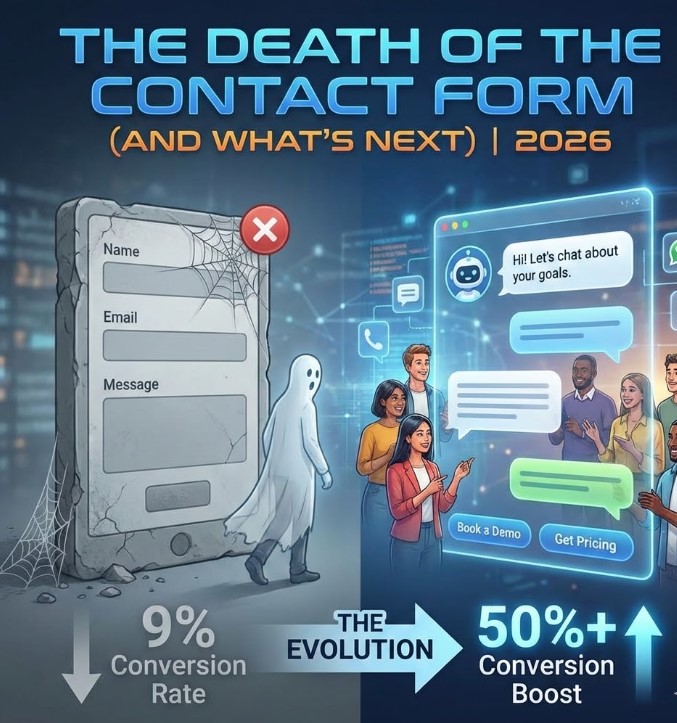
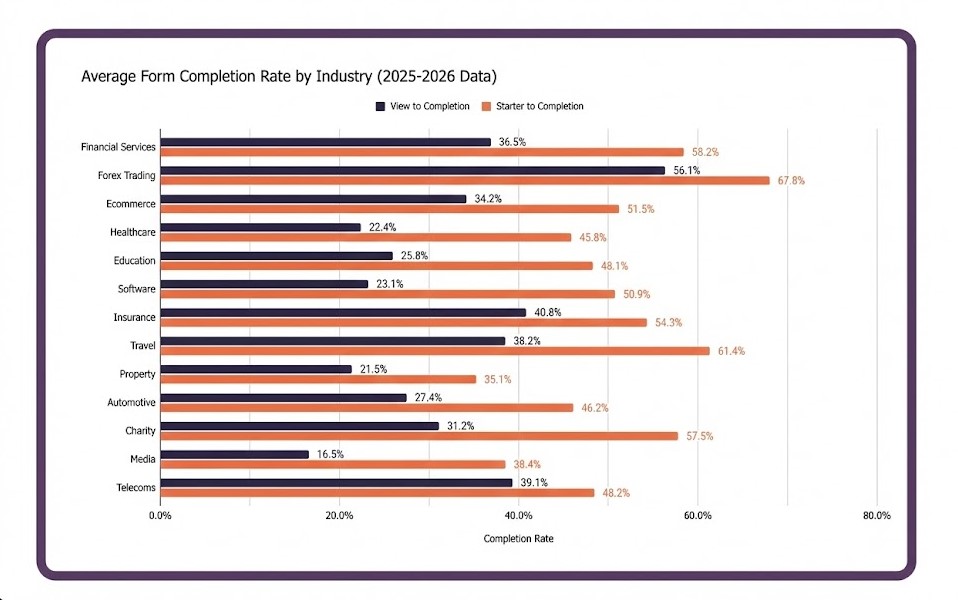
It happens far more often than most businesses realize. On average, only 9% of visitors actually submit a standard contact form. Even more telling, fewer than half of those who start filling it out ever finish. In practice, that means the majority of people who showed real interest never even get to the point of starting a conversation.
In this article, we’ll look at why traditional contact forms are quietly hurting conversion rates and how more interactive tools are changing the way visitors become paying customers.
The History of Contact Forms: From 2000s Success to Today’s Decline
Back in the early 2000s, contact forms felt revolutionary. A simple set of fields like name, email, and a short message could easily replace a phone call. Most users were browsing on desktop computers, typing was effortless, and patience was part of the online experience. Waiting a day or two for a reply felt completely normal.
Fast forward to today, and the situation has changed dramatically. The conversion rate for visitors who view a contact form and actually complete it now sits at around 9% (Resource: formstory). Mobile browsing has become the default, and typing detailed messages on small screens is inconvenient at best. Users expect immediate answers, personalized pricing, and clear next steps without unnecessary delays. Compared to modern expectations, traditional contact forms feel slow, generic, and out of sync with how people prefer to interact online.
The issue isn’t that contact forms are technically broken. The problem is that the way people engage with websites has fundamentally changed. Companies that continue to rely solely on standard contact forms are, often without realizing it, leaving valuable opportunities and revenue behind.
The Hidden Cost of Outdated Contact Forms for Businesses
The real risk of relying on outdated contact forms goes far beyond losing a few leads. In many cases, these forms actively push potential customers away. Each extra field, every vague question, and any delay in response slowly erodes trust and interest before a conversation even begins.
When a website asks for personal details like a phone number without offering immediate value in return, it often creates unnecessary friction. Many users simply decide it is not worth the effort. Research confirms this behavior. Adding just a phone number field can reduce conversion rates by around 5% almost instantly.
Response time is another critical issue. Studies show that 78% of buyers choose the first company that responds to them. Even more striking, every 10-minute delay after a form submission can reduce the chance of conversion by up to 400%.
A visitor who waits hours or even days for a reply is very likely to turn to a competitor who responds right away. At the same time, traditional contact forms collect very little context. As a result, sales teams often spend valuable time chasing leads that were never a good fit to begin with.
There are also several less obvious costs that many businesses overlook:
- Manual responses drain time: Answering every inquiry quickly requires constant attention from sales managers and support teams.
- Missed opportunities caused by timing: A form may be submitted, but a follow-up call happens hours or days later. By then, the user may be unavailable or no longer interested.
- Long clarification calls: Some conversations stretch to 30 or 40 minutes just to cover basic details that could have been handled instantly with a more interactive approach.
- Spam submissions waste resources: Fake or irrelevant entries distort analytics and force teams to spend time filtering instead of selling.
- Unclear pricing discourages action: In service-based businesses, users want immediate clarity on costs. If pricing remains vague, many potential customers simply move on.
In short, outdated contact forms are not just ineffective. They quietly become expensive, costing businesses real opportunities, valuable time, and strong first impressions that are hard to recover once lost.
Read also: Quick Guide to Building a Custom Calculator for Your Website in 12 Clear Steps
What’s Replacing Contact Forms in 2026
Modern websites are steadily moving away from static contact forms and toward interactive, self-service tools that give visitors immediate value. These are no longer simple add-ons or visual enhancements. In many cases, they have become the strongest lead-generation assets on the site.
Instead of asking users to wait, these tools let them explore options, get answers, and make decisions right away.
Here are some of the most widely used interactive solutions across different industries:
- Cost calculators: Allow visitors to receive a personalized price estimate within seconds, without sending an email or waiting for a callback.
- Chatbots with logic: Deliver real-time responses based on user choices, guiding them step by step instead of offering generic replies.
- AI recommendation engines: Automatically suggest relevant products or services based on user input and behavior.
- Self-service booking systems: Enable instant scheduling or purchases, removing the need for long email exchanges.
What makes these tools so effective is simple. They deliver value first. Users receive a number, a plan, or a recommendation before being asked to share contact details. This approach builds trust early and results in leads that are far better qualified by the time they reach a sales team.
Real-World Success Stories with Interactive Tools
Large brands and fast-growing startups are already demonstrating how replacing static forms with interactive experiences can lead to measurable results.
Finance
According to Ahrefs, Groww’s SIP Investment Calculator attracts around 3.5 million monthly visits and has an estimated traffic value of $128,000. With more than 200 calculators across its platform, Groww has turned interactive tools into one of its most powerful traffic and lead-generation channels.
Retail
IKEA’s Kitchen Planner allows customers to design their ideal kitchen, compare layouts, and see pricing instantly. By removing uncertainty early in the process, the tool shortens decision cycles and helps shoppers move from inspiration to purchase much faster.
Small businesses
A home renovation company once relied on a basic “contact us for a quote” form. By the time their team followed up, many leads had already lost interest. After introducing an online project cost estimator, their conversion rate increased from 2% to over 7%, and incoming leads arrived with detailed project information already filled in.
An online store selling custom-made products faced a 50% drop-off rate during quote requests. Once an instant pricing calculator was added directly to product pages, eight out of ten visitors continued to checkout instead of abandoning the process.
Taken together, these examples show a clear pattern. Interactive tools often become not only the most visited sections of a website, but also the most profitable ones.
Why Interactive Tools Convert Better
The reason interactive tools perform so well is rooted in basic human behavior. People want quick answers. When a website guides them step by step and provides clear, immediate feedback, taking the next action feels natural. That next step might be viewing a price range, receiving a tailored recommendation, or confirming a booking.
Compared to static contact forms, interactive tools consistently outperform for several clear reasons.
- Fast access to information: Visitors receive answers instantly, without waiting for a sales reply. This immediacy keeps attention high and prevents frustration, especially for mobile users who expect results within seconds.
- Step-by-step guidance: Interactive flows break complex decisions into smaller, manageable steps. Each choice helps narrow the options, reducing uncertainty and making the experience feel personal rather than overwhelming.
- Gamification elements: Sliders, quizzes, and calculators introduce an interactive layer that makes the process engaging. This approach is widely used by well-known global brands to increase completion rates and keep users involved until the end.
- Reduced workload for sales teams: By collecting key details upfront, interactive tools allow sales managers to focus on qualified leads only. Conversations become more efficient, often lasting around 10 minutes instead of an hour. With this setup, one manager can handle four clients per hour, compared to just one when relying on static forms.
- Automatic lead qualification: User input naturally filters out low-quality or irrelevant requests. This reduces spam and ensures sales teams spend their time on prospects with real intent.
- Personalized experiences: Every response adapts based on user choices. Pricing estimates, suggestions, and plans feel tailored, which builds trust. When users feel that a tool understands their needs, engagement rises.
- Longer on-site engagement: Interactive experiences encourage visitors to explore further instead of leaving after one page. Each step delivers immediate feedback, keeping users involved and increasing the likelihood of a purchase or booking.
- Easy sharing: Results from planners, quizzes, or calculators can often be shared via messaging apps or social platforms. This organic sharing brings in new visitors without additional marketing spend.
Businesses that replace static contact forms with interactive tools frequently see conversion rates double or even triple. In some cases, improvements reach up to 160%, showing that leading users with immediate value produces real, measurable results.
Addressing Common Concerns
If you’ve been running your business for years using nothing more than a contact form, it’s natural to hesitate before adding new elements to your website. Many teams worry about complexity, costs, or whether users will actually adopt a different way of getting in touch.
Here are some of the most common questions businesses ask before introducing interactive tools on their website.
“It will be too complicated to set up.”
Most modern solutions are built with simplicity in mind. Many use visual, drag-and-drop builders that require no technical background and can be launched quickly.
“Our pricing changes too often.”
That is rarely a real limitation. Calculator logic and pricing rules can be updated at any time, allowing your tool to stay aligned with current offers or market conditions.
“Our industry is too specific.”
Interactive tools are highly flexible. Custom rules, conditions, and flows can be tailored to fit even very niche or complex business models.
“We don’t want to show exact quotes.”
You don’t have to. Results can be clearly labeled as estimates, ranges, or starting prices, giving users guidance without locking you into fixed numbers.
“It sounds expensive.”
In practice, the return on investment often comes faster than expected. Many businesses recover the cost within weeks through higher-quality leads and improved conversions.
“It will slow down our website.”
Lightweight implementations and proper caching prevent performance issues. When done correctly, interactive tools have minimal impact on loading speed.
“It will remove the human element.”
These tools are not meant to replace personal interaction. They work best as a first step, gathering context and intent before a more meaningful human follow-up.
This shift is less about replacing people and more about making every conversation start on better ground.
Read also: 6 WordPress Squeeze Page Builders That Actually Increase Email Sign-ups
How Interactive Tools Work
At their core, interactive tools are compact software elements embedded directly into your website. They react to a visitor’s input in real time, turning a one-way form into an active exchange. Instead of simply collecting information, these tools create an ongoing interaction between the user and the business.
It is closer to a conversation than filling out a form. As soon as someone starts using the tool, it adapts to their choices. Questions can appear, disappear, or change based on previous answers. A pricing calculator might update totals as quantities are adjusted, while a quiz can skip irrelevant steps once enough information is gathered.
Behind the scenes, everything is driven by conditional logic and instant processing. Each visitor follows a different path, shaped by their own input, yet everyone reaches an outcome that feels specifically designed for them.
The real value appears after the result is shown.
- Immediate value: Visitors receive a clear cost breakdown, a tailored recommendation, or a practical plan without waiting for a response.
- Clear next step: Booking buttons, checkout links, or downloads are placed directly alongside the result, making it obvious what to do next.
- Full context for follow-up: Every response is stored, so your team enters the first conversation already understanding the visitor’s needs and intent.
By doing this, your website stops behaving like a static brochure and starts guiding visitors through a structured, purpose-driven experience.
The ROI Is Hard to Ignore
Once an interactive tool is live, it works continuously in the background. It does not need constant supervision, manual sorting, or immediate follow-up. Your team only steps in when a lead has already been qualified and shows real intent.
When you compare this to the ongoing costs of paid advertising or outbound sales efforts, the difference becomes obvious. A well-built cost calculator or similar tool can often cover its own investment within a matter of weeks, simply by improving lead quality and conversion rates.
Below is a simplified comparison that highlights the impact.
Comparative metrics
| Metric | Static Form | Interactive Tool |
|---|---|---|
| Conversion Rate | 1–3% | 5–10%+ |
| Lead Qualification | Low | High (auto-filtered) |
| Response Time | 1–48 hours | Instant |
| Manager Time Spent | High | Low |
What this shows is not just higher conversion, but a more efficient system overall. Interactive tools reduce wasted effort, speed up decision-making, and allow teams to focus on conversations that actually move the business forward.
Example Pipeline Math
To understand the real impact of interactive tools, it helps to look at a simple, realistic comparison. The numbers clearly show how both lead volume and lead quality improve.
Using a traditional contact form:
- Visits: 1,000
- Leads generated: 2% conversion → 20 leads
- Sales from leads: 3 deals → 15% lead-to-sale conversion
After introducing an interactive tool:
- Visits: 1,000
- Leads generated: 7% conversion → 70 leads
- Sales from leads: 15 deals → 21.4% lead-to-sale conversion
The overall impact:
- Leads increased by 3.5×
- Sales increased by 5×
- Lead quality improved, reflected in the rise of lead-to-sale conversion from 15% to 21.4%
By adding a cost calculator or similar interactive tool, the sales process changes noticeably. Teams receive more leads, but more importantly, those leads arrive better informed and closer to making a decision. Less time is wasted on unqualified prospects, and conversations move forward faster and with far greater efficiency.
Read also: The Ultimate Guide to Google Core Web Vitals for WordPress
Rethinking “Contact” in 2026
When businesses start rethinking how visitors interact with their website, the conversation almost always comes down to UI/UX Design. And this goes far beyond visuals or layout decisions. It is about removing friction at every step and making sure people immediately understand what to do next. Interactive tools succeed because they respect the user’s time. Instead of asking visitors to stop, think, and type into a blank form, they guide them forward with clear options, instant feedback, and a sense of progress that keeps them engaged.
Behind that smooth experience is often AI Integration, quietly working in the background. Logic-driven flows adapt in real time, adjusting questions, calculations, and recommendations based on each user’s input. The result feels personal without being intrusive. Visitors get answers that match their situation, while businesses receive leads that already come with context, intent, and clarity.
Taken together, this shift changes the role of the website entirely. It stops acting like a static brochure and starts functioning as an active part of the sales process. Instead of collecting vague inquiries and following up blindly, teams begin conversations with informed prospects who already know what they want and what to expect.
In 2026, the goal is no longer to convince people to fill out a form. It is to help them make a decision while their interest is still high. When websites deliver value first and guide users through a meaningful experience, contact details become a natural next step rather than a barrier.