


 Subscribe
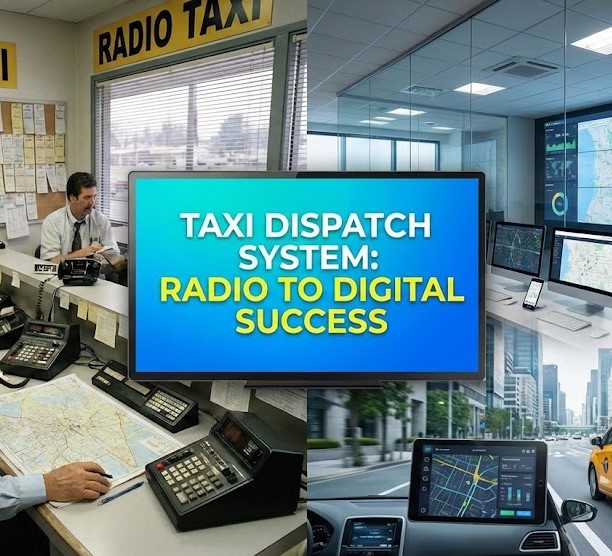
Over the past thirty years, the taxi industry has gone through a significant technological shift. What started with basic radio-based communication systems in the 1980s has gradually evolved into advanced digital platforms that now shape modern urban mobility.
The transition from radio dispatch to digital solutions reflects more than technical progress. It represents a fundamental change in how taxi businesses operate, compete, and build relationships with customers. Companies that once relied on radio taxi networks and dominated city transport are now facing a clear choice. They must adapt to digital tools or risk losing their position in a market that is increasingly technology driven.
Market data clearly supports this trend. The global taxi market was valued at USD 292.60 billion in 2025 and is expected to reach USD 587.31 billion by 2033, with a compound annual growth rate of 9.1 percent. The majority of this growth is driven by digitally enabled services, while radio-based operators continue to struggle to maintain relevance.
This article examines that transformation in detail. It explains why radio systems became outdated, how dispatch technology has developed over time, and what practical benefits digital platforms offer today. For taxi business owners who want to remain competitive in 2025 and beyond, understanding this shift is essential.
Why Radio Dispatch Systems Became Obsolete
For many years, radio dispatch systems formed the technological foundation of taxi operations. Drivers relied on two-way radios to receive assignments from a central dispatcher who manually coordinated bookings. At the time, this approach represented a major step forward. Over time, however, the limitations of an analog system became increasingly apparent, especially as the industry moved toward digital solutions.
Communication Bottlenecks and Human Error
Radio dispatch depended entirely on voice communication between dispatchers and drivers. During peak periods, this often led to congestion, as dispatchers struggled to handle several conversations at once. The system was also highly susceptible to human error. Unclear addresses, misunderstood pickup points, and incorrectly repeated instructions frequently resulted in missed trips and dissatisfied passengers.
Limited Scalability and Coverage
Radio-based systems operated within a limited range of frequency channels, which restricted the number of simultaneous communications. As taxi fleets expanded, the underlying infrastructure could not scale efficiently. Larger operations required additional channels and more dispatch personnel, which significantly increased both complexity and operational costs.
Geographical coverage presented further challenges. Radio signals weakened over distance and were often disrupted in dense urban environments with tall buildings. Drivers working at the edges of service zones frequently lost contact with dispatch, creating areas where coordination became unreliable or impossible.
No Real-Time Visibility
One of the most critical shortcomings was the lack of real-time fleet visibility. Dispatchers had no accurate way to track vehicle locations and had to rely solely on information reported verbally by drivers. This made effective planning and route optimization extremely difficult.
Absence of Customer Convenience
From the customer perspective, radio dispatch offered very limited transparency. After placing a booking by phone, passengers had no insight into arrival times, vehicle location, or potential delays. They could not easily update their request or communicate changes, which often led to frustration, especially during time-sensitive journeys or adverse weather conditions.
Payments were handled almost exclusively in cash, increasing security risks for drivers and passengers alike. There were no digital trip records, no automated billing for corporate clients, and no reliable way to build customer loyalty through structured data.
High Operational Costs
Despite appearing straightforward, radio dispatch systems were costly to operate. Equipment required frequent maintenance and replacement, radio licenses had to be renewed regularly, and maintaining a dedicated dispatch team resulted in substantial ongoing payroll expenses.
Industry data shows that manual coordination accounted for roughly 40 percent of dispatcher workload, much of which involved repetitive tasks that could be automated. This inefficiency significantly increased operational overhead.
Taken together, these limitations made radio dispatch systems increasingly impractical as customer expectations evolved and digital competitors entered the market. What was once considered advanced technology gradually became a major obstacle to scalability, efficiency, and long-term profitability.
Read also: Why Taxi Businesses Must Upgrade to Modern Taxi Dispatch Software in 2025
Why Radio Dispatch Systems Became Obsolete
For many years, radio dispatch systems served as the technological foundation of taxi operations. Drivers using two-way radios received trip assignments from central dispatchers who manually managed every booking. Although this model was innovative at the time, the analog nature of the system introduced limitations that eventually made it incompatible with the demands of the digital era.
Communication Bottlenecks and Human Error
Radio dispatch depended fully on voice-based communication between dispatchers and drivers. During peak periods, this approach often resulted in serious bottlenecks, as dispatchers had to juggle several conversations at once. The system was highly prone to errors. Incorrect addresses, unclear pickup points, and misheard instructions frequently led to missed trips and dissatisfied customers.
Limited Scalability and Coverage
Radio systems operated within a limited set of frequency channels, which restricted the number of active communications at any given time. As taxi fleets expanded, the underlying infrastructure failed to scale accordingly. Larger operations required additional dispatch channels and more coordinators, leading to a sharp increase in complexity and operational costs.
Geographical reach was another persistent issue. Radio signals weakened with distance and were often disrupted in dense urban areas with tall buildings. Drivers working near the edges of service zones regularly lost contact with dispatch, creating coverage gaps where coordination became unreliable.
No Real-Time Visibility
One of the most serious shortcomings was the lack of real-time fleet visibility. Dispatchers had no reliable way to determine the actual location of vehicles and had to depend entirely on information verbally reported by drivers.
Absence of Customer Convenience
From the customer’s perspective, radio dispatch provided very little transparency. After placing a booking by phone, passengers had no ability to track their taxi, estimate arrival times, or notify dispatch of changes. This absence of visibility often caused frustration, especially during urgent journeys or unfavorable weather conditions.
Payments were handled almost exclusively in cash, increasing security risks for both drivers and passengers. There were no digital trip records, no automated billing for corporate clients, and no practical way to build long-term customer loyalty using data.
High Operational Costs
Despite its apparent simplicity, radio dispatch was costly to maintain. Equipment required frequent servicing and replacement, radio licenses had to be renewed, and maintaining a dedicated dispatch team resulted in significant ongoing payroll expenses.
Industry data shows that manual coordination accounted for approximately 40 percent of dispatcher workload, much of it spent on repetitive tasks that could have been automated. This inefficiency substantially increased operational overhead.
Taken together, these disadvantages made radio dispatch systems increasingly impractical as customer expectations evolved and digital competitors entered the market. What was once considered advanced technology gradually became a major obstacle to efficiency, scalability, and sustainable growth.
The Digital Dawn: How Taxi Dispatch Systems Emerged and Evolved
The gradual shift from radio systems to computer-aided dispatch, then to GPS-based tracking, mobile applications, and finally AI-driven platforms reflects a fundamental transformation in how taxi businesses function. Each stage of this evolution responded to clear limitations of earlier technologies while introducing new operational possibilities.
Every technological step improved efficiency, visibility, and control. What once depended on manual coordination and limited information gradually evolved into connected systems capable of real-time decision making. These advancements did not simply modernize dispatch operations. They reshaped how taxi companies manage fleets, serve customers, and scale their services in an increasingly digital market.
Read also: Taxi Business Automation: How to Save 6+ Hours a Day and Stop Losing Clients
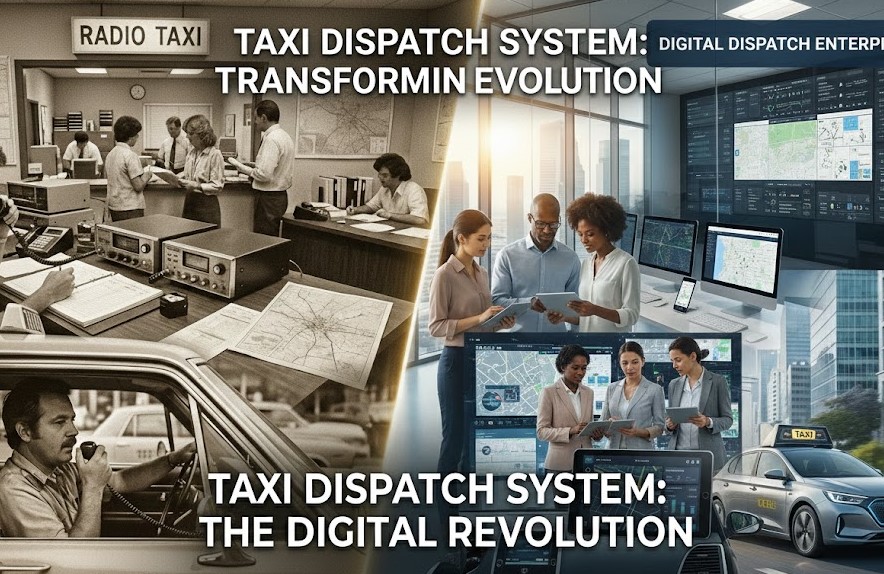
The Competitive Advantage: How Digital Dispatch Systems Drive Business Success
Modern taxi dispatch systems deliver far more than operational efficiency. They create tangible competitive advantages that clearly distinguish businesses that grow and adapt from those that struggle to survive in an increasingly digital market.
1. Operational Excellence Through Automation
Digital dispatch platforms automate processes that previously required hours of manual coordination.
Intelligent job allocation allows algorithms to instantly match incoming ride requests with the most suitable drivers based on location, availability, vehicle type, and performance history. Tasks that once took dispatchers several minutes per booking are now completed almost instantly.
Reduced idle time is another major benefit. Real-time visibility into fleet activity and demand patterns helps keep drivers consistently productive. Studies indicate that automated dispatch can reduce driver idle time by 30 to 40 percent, directly increasing revenue per vehicle.
Error elimination further improves operational reliability. Automated address validation, GPS-supported navigation, and digital trip records significantly reduce the risk of miscommunication and human error that was common in manual systems.
Research published by IJRASET confirms that digital transformation leads to measurable improvements in operational efficiency, with automated dispatch ranked among the most impactful technologies adopted by traditional taxi services.
2. Superior Customer Experience
Digital platforms align taxi services with modern customer expectations that radio dispatch systems could not meet.
Instant booking enables customers to request rides within seconds through mobile applications, websites, or integrated phone systems, without busy signals or long wait times.
Complete transparency gives passengers full visibility into their journey. Real-time GPS tracking shows vehicle location and estimated arrival times, while driver details, vehicle information, and fare estimates are available before confirmation.
Flexible payment options replace cash-only transactions. Integrated digital wallets, card payments, and corporate billing improve both convenience and security for customers and operators.
Service quality controls are reinforced through two-way rating systems. These encourage professional behavior from drivers while helping operators identify and manage problematic customers.
Industry research shows that 59.6 percent of taxi operators cite improved customer service as the primary benefit of digital transformation, with direct positive effects on customer retention and satisfaction.
3. Data-Driven Decision Making
Digital dispatch systems generate operational data that radio-based models could never provide.
Performance analytics deliver detailed insights into driver productivity, customer behavior, peak demand periods, and operational inefficiencies. These metrics support informed strategic decisions rather than guesswork.
Demand forecasting uses historical data combined with advanced algorithms to anticipate busy periods. This allows operators to position vehicles proactively and maximize fleet utilization.
Financial insights from automated reports clearly show which routes, services, and time slots are most profitable, enabling smarter pricing strategies and resource allocation.
According to industry studies, 60.8 percent of digitally transformed taxi operators actively use data analytics tools to optimize everything from pricing models to fleet expansion plans.
4. Cost Reduction and Profitability
Although digital dispatch systems require an initial investment, they deliver consistent long-term cost savings.
Lower labor costs result from automation. With digital tools, a single dispatcher can manage workloads that previously required several radio dispatchers.
Improved fuel efficiency comes from GPS-optimized routing and reduced idle time. Operators typically see fuel savings of 15 to 25 percent, translating into significant annual cost reductions per vehicle.
Reduced disputes are another financial benefit. Clear digital records of trips, routes, and payments help resolve conflicts quickly and minimize losses related to customer complaints.
Better asset utilization ensures vehicles are used efficiently, improving overall return on investment across the fleet.
Research by Quick-Works indicates that taxi operators implementing dispatch software often achieve a return on investment within six to twelve months, with profitability continuing to improve over time.
5. Scalability and Growth Enablement
Digital dispatch platforms are designed to scale without operational friction.
Geographic expansion becomes straightforward with cloud-based systems that function anywhere with an internet connection, removing the need for additional infrastructure.
Fleet growth no longer requires proportional increases in staff or equipment. New vehicles can be added seamlessly within the existing system.
Service diversification is easily supported. Modern platforms can manage standard taxi services, premium vehicles, airport transfers, and corporate accounts within a single environment.
Integration capabilities through APIs allow operators to connect with hotels, restaurants, corporate partners, and affiliate networks, opening additional revenue channels.
The global taxi dispatch software market is projected to grow from USD 465.2 million in 2024 to significantly higher levels by 2033. This growth is driven by operators recognizing these advantages and investing in digital transformation.
6. Compliance and Regulatory Benefits
Digital dispatch systems simplify regulatory compliance through automated record management.
Trip logs provide complete electronic records of every journey, supporting audits and tax reporting.
Driver management tools track licenses, certifications, and compliance documentation automatically.
Financial reporting features support accurate tax calculations, invoicing, and regulatory submissions.
Safety features such as emergency alerts, trip sharing, and incident reporting improve passenger protection while reducing legal risk for operators.
For UK-based operators, capabilities like TfL compliance monitoring and HMRC-ready invoicing turn regulatory requirements from administrative burdens into streamlined, automated processes.
Read also: Data-Driven Taxi: How Smart Use of Data Helps You Grow Your Taxi Business
The Digital Imperative for Radio Taxi Businesses
Modern dispatch software does far more than streamline daily taxi operations. It enables a complete transformation, allowing radio-based taxi businesses to evolve into competitive, profitable, and technologically mature enterprises capable of meeting current market demands.
Findings from the IJRASET study reinforce what industry leaders have recognized for years. Digital transformation delivers measurable gains in cost efficiency, operational performance, customer satisfaction, and overall market positioning. With more than 81 percent of industry stakeholders reporting a significant impact from digital adoption, the key question is no longer whether businesses should digitize, but how quickly they can move forward with the transition.
Radio dispatch systems supported taxi operations effectively for decades. However, their structural limitations now pose serious competitive risks. Communication bottlenecks, limited operational visibility, poor scalability, and minimal customer convenience have become critical weaknesses. Today’s customers expect instant booking, real-time tracking, transparent pricing, and cashless payments. These features are no longer optional enhancements but essential requirements for staying relevant.
For radio taxi operators experiencing declining market share, increasing operational costs, and customer churn, digital dispatch platforms represent more than a short-term fix. They offer a clear path toward operational stability, renewed growth, and long-term profitability in a digitally driven mobility landscape.
Transform Your Radio Taxi Business into a Digital Dispatch Enterprise
Transitioning from a radio-operated model to a digital taxi dispatch system allows operators to modernize workflows, improve service quality, and compete effectively with app-based mobility providers. With the right technology in place, traditional taxi businesses can reposition themselves as agile, data-driven service providers ready for the future of urban transportation.