


 Subscribe

A goal without a plan remains just an idea. And when that goal is to launch a successful taxi business from the ground up, having a clear and reliable plan is not optional.
Whether you are an aspiring entrepreneur, an investor exploring opportunities in the taxi industry, or an established taxi service provider aiming to grow your operations, a well-structured business plan is the first real step toward building a sustainable taxi business.
This guide breaks the process down into clear sections and provides practical insights along with actionable steps to help you plan, launch, and grow a taxi business with confidence.
To begin, it’s essential to understand how the taxi industry works.
Understand the taxi industry
Before you move on to building a business plan, it’s important to develop a clear understanding of how the taxi transfer industry operates today. Knowing the landscape helps you make informed decisions and avoid costly assumptions. Here’s where to start.
Explore current market trends
Ride-hailing apps, taxi dispatch software, airport transfer software, limo booking platforms, corporate taxi transfer solutions, and car rental systems have reshaped the traditional way taxi businesses operate.
Technology has played a major role in transforming the taxi industry over the past few years. Along with operational changes, it has also influenced customer expectations and booking behavior.
According to Statista, the global taxi market is expected to generate revenue of US$153.40bn in 2024 and grow to US$161.1bn by 2028, with a CAGR of 1.23%.
Ride-hailing applications have significantly changed how people book and use taxi services, making speed, transparency, and convenience standard expectations rather than added benefits.
To remain competitive, it’s essential to stay informed about these developments and adapt your business model accordingly.
Note: If you’ve already decided to build a ride-hailing solution similar to Uber, there are ready-to-use app options available that can significantly reduce development time.
Know the key players
Identifying the most successful players in the taxi industry helps you understand which business models work and why they succeed. This kind of analysis gives you practical insight rather than theoretical assumptions.
Companies such as Uber and Lyft are among the most influential names in the taxi industry. They have reshaped expectations for both passengers and taxi business owners by prioritising convenience, safety, and affordability.
Take time to study how these companies operate, which innovations they have introduced, and how they adapt to changing customer needs. Looking closely at their approach can help you define what strategies and features may contribute to the long-term success of your own taxi business.
Identify opportunities and challenges
Every industry comes with its own mix of opportunities and challenges, and the taxi industry is no exception.
One of the main opportunities lies in the growing demand for reliable and convenient transportation services. Urbanization, increased travel, and the need for flexible mobility options continue to drive demand for taxi and transfer services across many regions.
According to recent market research by IMARC Group, the global taxi market continues to show steady development. In 2024–2025, the market is expanding at a consistent pace and is projected to reach approximately US$350 billion in value by the early 2030s, with an average annual growth rate of around 4–5%.
This upward trend is supported not only by rising urban mobility needs but also by the increasing use of digital booking platforms and automation tools within taxi and transfer services.
In today’s market, a significant part of this potential comes from technology adoption. Solutions such as taxi dispatch software allow businesses to streamline operations, reduce response times, and improve the overall customer experience, making scalable growth more achievable.
At the same time, several challenges must be considered. Regulatory requirements vary by region, competition from ride-hailing platforms remains intense, and fluctuating fuel prices can directly impact operating costs and pricing strategies.
By understanding these factors early on, you can develop realistic strategies that help capitalize on opportunities while managing risks in a controlled and sustainable way.
Read also: Starting a Taxi Business: What You’ll Need and How Much It Costs
Executive summary
The executive summary provides a clear snapshot of your overall business plan. Its purpose is to give readers a high-level understanding of your taxi business, its direction, and its potential. Below, you’ll find the key elements of an executive summary and guidance on how to shape each part effectively.
Define your business concept
Start by clearly defining what you plan to offer as a taxi business owner. Decide whether your focus will be broad or specialized. For example, your services may include:
- Ride-hailing
- Limo transfers
- Airport transfers
- Corporate transfers
- Car rentals and related services
Once your service scope is defined, outline your business model and explain the practical steps that will make your offering distinct in the market.
Craft your value proposition
Your value proposition explains why customers should choose your taxi transfer service over others. This could be based on factors such as:
- Superior customer service
- Reliable and innovative technology
- Eco-friendly vehicle options
- Competitive and transparent pricing
A well-defined value proposition helps you attract and retain customers, supports sustainable growth, and strengthens your long-term market position.
Set your vision and mission
Your vision statement should communicate your long-term goals and describe what you aim to achieve as your business grows.
Your mission statement, on the other hand, should clearly explain the core purpose of your taxi business and outline how you plan to turn your vision into reality through day-to-day operations and strategic decisions.
Financial projections
Financial projections provide an overview of your expected financial performance and help demonstrate the viability of your business. This section should briefly cover key metrics such as:
- Projected revenue
- Profitability
- Return on investment
Well-prepared financial projections support better decision-making and can play a significant role in the overall success and credibility of your business plan.
Conduct in-depth market analysis
A thorough market analysis helps you understand real market needs, evaluate demand, and build strategies that allow your taxi business to compete effectively. This step lays the foundation for informed planning and smarter decision-making.
Know your target customers
Start by clearly defining your target audience. Understanding who your ideal customers are allows you to shape your services around their expectations. Consider key factors such as demographics, preferences, and everyday transportation needs.
For instance, if your taxi transfer service is focused on urban areas, your target audience may include:
- Professionals
- Tourists
- Local residents
Identifying these customer groups gives you a clearer picture of who you are serving and helps you design a business plan that aligns with real demand, increasing the likelihood of long-term success.
Evaluate the market needs and demand
Market research allows you to spot gaps in existing services and uncover unmet customer expectations. It helps answer important questions such as what problems your service solves and what customers truly value in a taxi provider.
Common factors often include reliability, affordability, convenience, and safety. Understanding how these priorities vary across customer segments enables you to position your service more effectively.
Perform detailed and smart competitor analysis
Analyzing competitors helps you see where your business can stand out. Take time to evaluate:
- Who your main competitors are
- What they do well
- Where their services fall short
- Their product strengths and weaknesses
A detailed competitor analysis provides insight into current industry practices and emerging trends. More importantly, it helps you identify clear opportunities for differentiation and improvement within the market.
Do SWOT analysis
Before moving forward, it’s important to clearly understand what a SWOT analysis represents.
S – Strengths
W – Weaknesses
O – Opportunities
T – Threats
Conducting a SWOT analysis allows you to evaluate your business from multiple angles by identifying internal strengths and weaknesses, as well as external opportunities and potential threats.
This approach helps you develop strategies that build on what you do well, improve areas where you may be lacking, take advantage of market opportunities, and reduce risks before they become serious obstacles.
Many taxi businesses struggle when it comes to adopting modern technology or implementing reliable taxi booking solutions that can truly support growth. A lack of efficient systems often limits operational efficiency and affects customer experience.
If technology is one of your weak points and you see the absence of advanced taxi dispatch software as a potential threat, it’s important to address this concern early. Understanding how the right technology can support scalability and profitability will help you make more confident and informed decisions as you build your business.
Read also: Essential Dispatch Programs for Running a Successful Taxi Business
Finalize what service you’ll offer
Once you’ve completed your in-depth market analysis, the next step is to clearly define the range of taxi transfer services your business will provide. Having a well-defined service scope helps you stay focused and align your operations with real market demand.
Choose the service types
At this stage, outline the specific types of taxi services you plan to offer. Depending on your market analysis and business goals, these may include:
- Ride-hailing services
- Airport transfer services
- Corporate transfer services
- Limo transfer services
- Car rental services
- Taxi dispatch services
You can also expand this list based on local demand, partnerships, or niche opportunities identified during your research.
Make pricing strategy
Developing a thoughtful pricing strategy is essential for long-term success. Your pricing should be based on a clear understanding of key factors such as:
- Operational costs
- Market demand
- Competitor pricing
By setting strategic and flexible pricing across different services, you can balance competitiveness with profitability and support sustainable growth.
Offer additional services
Adding extra services can help your taxi business stand out in a competitive market. These may include allowing passengers to book rides through a mobile app or website, introducing loyalty programs, or offering carpooling options.
Additional features not only improve customer satisfaction but can also increase overall revenue. At the same time, they help attract new customers while encouraging repeat bookings from existing ones.
Create a winning marketing and sales strategy
A well-planned marketing and sales strategy plays a key role in customer acquisition and long-term growth. This section outlines the practical steps you can take to build a strategy that supports visibility, trust, and consistent demand for your taxi business.

Create a strong brand and position
Start by building a clear and recognizable brand identity that connects with your target audience. Your brand should reflect your value proposition and clearly communicate what makes your taxi service different from competitors. This includes elements such as:
- Business name
- Logo
- Tagline
- Overall brand messaging
When these elements are aligned, your brand becomes easier to recognize and more memorable for potential customers.
Choose various marketing channels
Marketing your taxi business effectively requires a mix of both online and offline channels. Each channel serves a different purpose and helps you reach customers at various touchpoints.
For online promotion, commonly used platforms include:
- Social media
- Search engine marketing
- Online advertising
Offline marketing efforts may involve:
- Flyers
- Billboards
- Local partnerships
Using both approaches allows you to reach a broader audience and maintain consistent visibility across different environments.
Plan for customer acquisition
Customer acquisition is not only about attracting new users but also about retaining existing ones. This starts with delivering reliable service, smooth communication, and a positive overall customer experience.
You can further support acquisition by offering promotional deals, referral programs, and collaborating with local businesses to expand your reach.
Today, many successful taxi businesses gain a competitive edge by providing seamless booking experiences. Smart booking solutions powered by taxi booking software make it easier for customers to find, book, and manage rides, which directly supports higher conversion and repeat usage.
Read also: Revenue Strategies: Increase Your Taxi Fleet’s Profit by 30% Without Hiring More Drivers
Design a strong operational plan
A well-structured operational plan plays a key role in the success of large-scale taxi businesses such as Uber. For your own taxi business, this plan should cover everything from vehicle management and driver onboarding to technology integration. Let’s look at these elements in more detail.
Manage fleets effectively
Efficient fleet management is essential for keeping daily operations running smoothly. It directly affects service quality, operating costs, and customer satisfaction. Key areas to focus on include:
Vehicle selection:
Choose reliable and fuel-efficient vehicles that match the expectations and needs of your target customers.
Maintenance:
Ensure vehicles are serviced regularly so they remain safe, compliant, and in good working condition.
Logistics:
Plan routes and schedules carefully to improve efficiency and reduce unnecessary downtime.
When fleet management is handled manually, there is a higher risk of overlooking important details. In practice, businesses often miss one or more of these areas when relying on manual processes.
Leading companies such as Uber rely on fleet management tools, commonly known as taxi dispatch platforms, to maintain operational control. These systems send notifications when vehicles require maintenance and provide detailed insights into fuel consumption and route history.
Access to this data allows you to make informed decisions, not only about daily operations but also when planning fleet expansion and adding new vehicles in the future.
Focus on driver recruitment and training
Attracting and retaining skilled drivers is essential for delivering a high-quality taxi transfer service. Your drivers directly influence customer experience, service reliability, and overall brand perception. This process typically includes the following areas.
Recruitment
Start by developing a clear strategy to attract qualified and reliable drivers. This may involve multiple channels, such as:
- Job postings
- Referral programs
- Partnerships with driving schools
Using a combination of these approaches helps you reach a broader pool of candidates and maintain consistent driver availability as your business grows.
Training
Once drivers are onboarded, proper training becomes just as important. Comprehensive training ensures drivers are prepared to meet service standards and handle real-world situations confidently. Key training areas should include:
- Safety protocols
- Customer service standards
- Use of technology and booking tools
Well-trained drivers are more likely to deliver consistent service and contribute to positive customer reviews.
Technology integration
One of the main reasons companies like Uber have scaled successfully is their strong focus on technology adoption and integration.
Implementing advanced solutions such as white-label taxi dispatch software can play a major role in streamlining operations and improving the overall customer experience. Effective technology integration typically includes:
Taxi dispatch software
Using reliable SaaS-based taxi dispatch software allows you to manage bookings, assign drivers efficiently, and monitor vehicles in real time.
GPS tracking
This feature can be integrated on its own or accessed through a ready-to-use taxi booking app. GPS tracking helps monitor fleets, optimize routes, and improve response times.
Customer app
Providing a user-friendly app allows customers to book rides easily, track drivers in real time, and complete payments without friction. This level of convenience has become a standard expectation in modern taxi services.
Read also: Why Taxi Businesses Must Upgrade to Modern Taxi Dispatch Software in 2025
Safety and compliance
Ensuring the safety of both customers and drivers is a core responsibility of any taxi business. A strong focus on safety not only reduces risks but also builds trust and long-term credibility.
Safety protocols: Implement clear and strict safety protocols across your operations and review them regularly to keep them up to date. This includes driver verification, vehicle safety checks, and emergency response procedures.
One effective way to support these measures is by using white-label taxi booking software equipped with advanced safety features. Such solutions can include real-time trip tracking, driver identification, and built-in communication tools that enhance passenger confidence.
Compliance: In addition to safety, your business must fully comply with local regulations and industry standards. This typically involves meeting licensing requirements, maintaining proper insurance coverage, and ensuring vehicles pass regular inspections.
Staying compliant helps prevent legal issues and ensures your taxi business operates smoothly and responsibly as it grows.
Create your financial plan
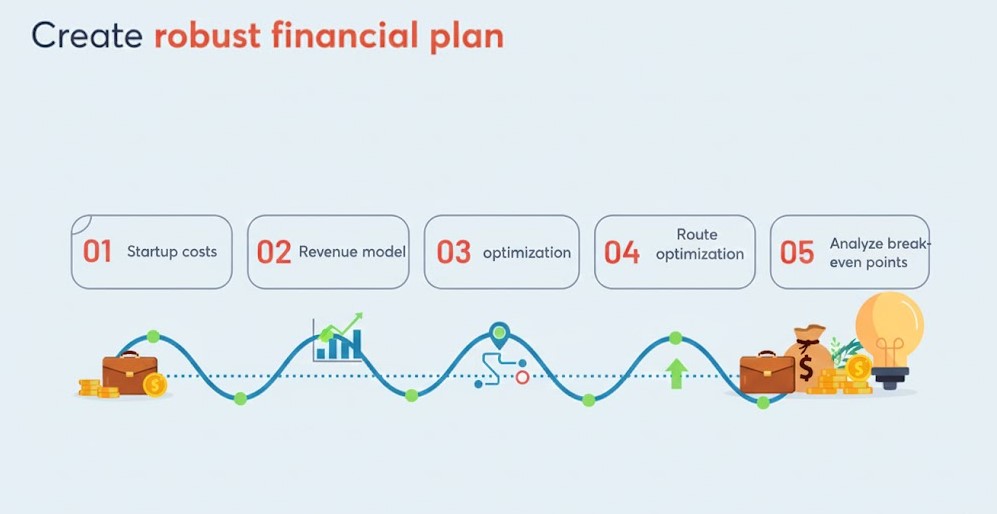
A solid financial plan is essential for securing funding and maintaining control over your business finances. This section helps you understand key financial aspects such as startup costs, revenue models, profit and loss projections, cash flow management, and long-term sustainability.
Startup costs
When launching a taxi business, having a clear view of your startup costs is critical. This allows you to accurately estimate the amount of funding required to get your operations up and running.
Typical startup expenses may include:
- Vehicle purchases
- Technology integration
- Marketing and administrative costs
Understanding these costs early helps you avoid budget shortfalls and plan your investments more effectively.
Revenue model
A well-defined revenue model explains how your taxi business generates income and supports profitability. It outlines how pricing is structured, where revenue comes from, and what level of profit you can expect over time.
When building your revenue model, consider your pricing strategy, projected revenue streams, and expected margins. A typical revenue model for a taxi business may include:
- Fare structures
- Payment processing
- Pricing strategies
Clear revenue planning helps you evaluate the financial viability of your services.
Profit and loss projections
Profit and loss projections allow you to estimate financial performance over a defined period, usually three to five years. These projections should include:
- Projected revenue
- Operating expenses
- Net profit
Reviewing your profit and loss forecasts on a regular basis helps you identify areas for improvement and ensures your business remains financially stable.
Cash flow management
Maintaining healthy cash flow is essential for the ongoing sustainability of your taxi business. Effective cash flow management involves:
- Cash flow forecasting
- Expense management
- Building financial reserves
Monitoring cash flow closely helps you handle unexpected costs and maintain operational stability.
Analyze your break-even points
A break-even analysis helps you determine when your business is expected to become profitable. This process involves calculating fixed and variable costs to understand how many rides or services are required to cover expenses.
By identifying your break-even point, you can set realistic financial goals and track progress toward long-term profitability.
Read also: 7 Key Do’s and Don’ts for Building a Profitable Taxi Business
Management and organization
This section outlines how your taxi business is structured and who is responsible for managing key areas of the operation. A clear management framework helps ensure accountability, efficient decision-making, and smooth day-to-day operations.
Organizational structure
Start by defining the main roles and responsibilities within your business. Depending on the size and scale of your operations, this structure may include:
Executive team:
Owners, founders, and senior managers responsible for setting strategic direction and making high-level decisions.
Operations manager:
Oversees daily operations, coordinates drivers, and manages fleet performance to ensure reliable service delivery.
Marketing manager:
Develops and executes marketing strategies aimed at attracting new customers and building long-term loyalty.
Finance manager:
Handles financial planning, budgeting, reporting, and overall accounting processes.
Clearly defining these roles helps avoid overlaps and ensures each part of the business is managed effectively.
Key team members
Highlight the skills and experience of your core team members. This may include details about their:
- Professional backgrounds
- Relevant qualifications
- Previous achievements and successes
A strong management team with industry-relevant experience builds confidence among stakeholders and plays a critical role in the long-term success of your taxi business.
Conclusion
Building a successful taxi business starts with clarity. A well-structured business plan helps you understand the market, define your services, organize operations, and make informed financial and strategic decisions.
From market research and service selection to technology adoption and financial planning, each step plays a role in shaping a business that is both competitive and sustainable. When these elements are aligned, you reduce uncertainty and create a solid foundation for growth.
The taxi industry continues to evolve, and businesses that plan ahead, invest in the right tools, and focus on customer experience are better positioned to adapt and scale. With a clear plan in place, you move from ideas to execution with confidence and purpose.