


 Subscribe

The taxi industry is evolving at a steady pace. Fuel prices fluctuate, electric vehicles are becoming more accessible, and customers now expect seamless online booking and instant confirmations. Despite these shifts, one thing remains constant: people will always need reliable transportation. If you are considering launching your own company, 2026 offers real opportunities for those who approach the process strategically and with a clear plan.
At first glance, it may seem simple to Start a Taxi Business. Many assume it is just about purchasing a vehicle and obtaining a license. In reality, building a stable and profitable operation requires far more preparation. You need to understand local regulations, calculate realistic startup costs, secure the right insurance, and define how your service will compete in a market influenced by ride-hailing platforms and digital convenience. The companies that succeed are those that combine operational discipline with smart technology choices.
Today, technology is no longer optional. Efficient dispatching, route optimization, and automated booking systems are essential for maintaining consistency and customer satisfaction. Investing in the right software taxi solution can dramatically improve daily operations, reduce administrative workload, and give even small fleets a professional edge. Modern tools allow you to track performance, manage drivers, and provide customers with the smooth experience they now expect.
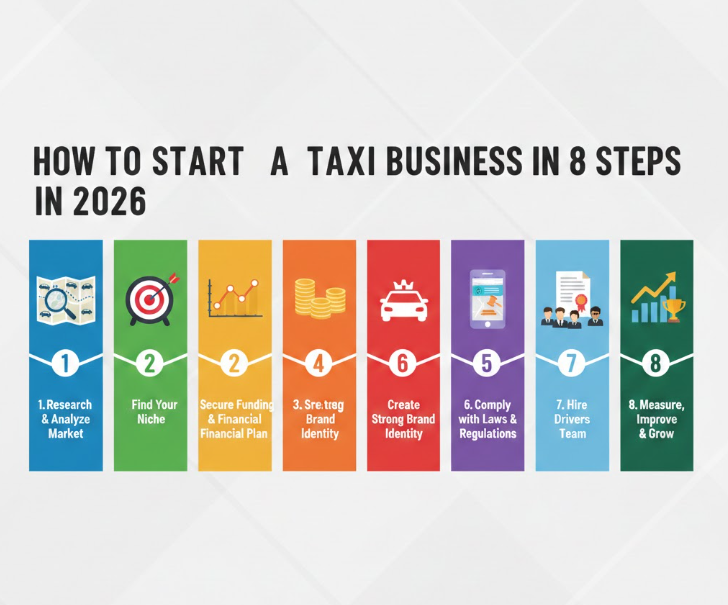
This guide, How to Start a Taxi Business in 7 Steps in 2026, walks you through the practical foundation required to build a sustainable company. Whether you are planning to operate independently with a few vehicles or aiming to expand into a larger fleet over time, the core principles remain the same. Careful planning, regulatory compliance, financial discipline, and a focus on service quality are what turn an idea into a long-term business.
In the following seven steps, you will find a structured roadmap designed to help you launch confidently and grow responsibly in today’s competitive transport market.
1. Research and Analyze the Taxi Market
Before you invest in vehicles, drivers, or a booking system, take the time to understand the market you are about to enter. Rushing this stage is one of the most common mistakes new operators make. A well-grounded analysis will not only clarify your risks, but also reveal opportunities others may have overlooked. If you want to Start a Taxi Business that lasts beyond the first year, this step sets the foundation.
Market research helps you see the bigger picture. Who are your potential passengers? Are they daily commuters, airport travelers, tourists, or corporate clients? What times of day show the highest demand? Which neighborhoods lack reliable coverage? The answers to these questions shape everything from pricing to fleet size. When thinking about how to start a taxi business, you are not just launching cars on the road, you are entering a local mobility ecosystem with its own habits and expectations.
Key actions:
- Assess local demand for mobility services.
- Identify gaps in mobility services offered by competitors.
- Study competitor pricing, branding, and operations.
- Explore emerging trends of 2026, such as electric vehicles and autonomous cars.
Look closely at how established taxi services position themselves. Some compete on price, others on speed, and some focus on premium service. Pay attention to their online reviews. They often reveal what customers appreciate and, more importantly, what frustrates them. Those frustrations can become your entry point.
It is also essential to understand the broader Taxi business growth trends for 2026. Sustainability is becoming a serious differentiator. Electric fleets reduce operating costs over time and appeal to environmentally conscious passengers. Digital booking platforms and automated dispatch systems are now expected rather than optional. Customers want transparency, accurate arrival times, and easy payment methods.
Tip: Keep a structured spreadsheet of your findings. Categorize mobility opportunities by estimated demand, operational complexity, and potential profitability. This simple habit brings clarity to your decision-making process. It will help you determine how to start a cab service in a market where other taxi services already operate, and how to position yourself strategically instead of competing blindly.
Read also: How to Build a Business Plan for a Successful Taxi Business
2. Find Your Niche (Segment) in the Taxi Market
Trying to compete head-to-head with large ride-hailing platforms is rarely a smart move for a new operator. Those companies operate at scale, invest heavily in marketing, and often compete aggressively on price. If you are planning to Start a Taxi Business, your strength will not be in matching their advertising budgets or discount strategies. Your advantage lies in focus.
Instead of positioning yourself as “just another taxi company,” define a niche where you can deliver clear and recognizable value. A niche allows you to attract customers who are not simply comparing prices, but looking for a specific type of service. When people choose based on trust, comfort, reliability, or specialization, they are less likely to switch providers over small price differences.
For example, you might consider one of the Popular taxi niches for 2026:
- Airport transfers for frequent travelers
- Senior or accessibility-friendly rides
- Pet-friendly services
- Luxury services
- Non-Emergency Medical Transportation (NEMT)
Each of these segments serves a different need. Airport transfers often involve predictable routes and higher trip frequency. Senior transportation requires patience, safety awareness, and sometimes accessibility-equipped vehicles. Pet-friendly services appeal to a loyal but specific audience. Luxury transport focuses on comfort and presentation. NEMT can provide stable, contract-based revenue but involves regulatory compliance.
Which niche should you choose?
The answer depends on your resources, experience, and long-term vision. There is no universal formula. Choosing a niche makes it easier to start a taxi service business without being swallowed by direct competition, but every segment has its own operational demands. Some require specialized training, others require higher investment in vehicles or insurance.
You may also decide not to limit yourself to one segment. With the right operational setup and scalable systems, it is possible to serve multiple customer groups. If your software taxi solution supports multi-service technology, you can manage different service categories under one structure while keeping operations organized and efficient.
Below is a short overview of trending mobility segments in 2026:
| Niche | Potential Advantage | Challenge |
|---|---|---|
| Airport | High-volume trips | Competition from apps |
| Seniors | Unique service | Requires accessibility training |
| Pets | High, unpredictable | Limited target audience |
| Luxury | Premium pricing | Higher maintenance costs |
There will always be demand for low-cost taxi rides. However, niche positioning allows you to charge appropriately for added value. Many customers are willing to pay more for reliability, professionalism, safety, community focus, or a premium experience. When your service solves a specific problem better than anyone else, price becomes only one part of the decision rather than the only one.
3. Secure Funding and Build Your Financial Plan
No matter how strong your idea is, launching without a clear financial plan can quickly create pressure you did not anticipate. When you Start a Taxi Business, you are committing to operational costs that begin long before your first steady stream of bookings arrives. That is why realistic budgeting is not optional. It is the backbone of your future stability.
A taxi operation involves visible and hidden expenses. Vehicles are only one part of the equation. You must also consider compliance requirements, insurance policies, digital systems, and ongoing marketing efforts. Even small oversights at this stage can affect your cash flow during the first critical months.
To build a solid financial structure for your cab service business, outline every potential cost in detail.
Key expenses:
- Vehicles (purchase, lease, or partner drivers)
- Insurance and licensing fees
- Digital infrastructure: apps, dispatch systems, admin panels
- Marketing and branding
Vehicle acquisition will likely be your largest upfront investment. Whether you purchase cars outright, lease them, or collaborate with partner drivers depends on your model and available capital. Insurance costs can vary significantly depending on region, fleet size, and the type of services you provide.
Digital infrastructure is another major factor. Modern operations rely on booking apps, dispatch systems, and management dashboards. Choosing the right software taxi solution can streamline daily operations, but it must fit within your financial framework. Investing wisely in technology often reduces long-term administrative and staffing costs.
Marketing and branding also require attention. Even the most reliable service will struggle if customers do not know it exists. Budget realistically for website development, online advertising, local promotions, and brand positioning.
Funding options:
- Personal savings
- Small business loans
- Angel investors or local grants
Each funding source carries different levels of risk and responsibility. Personal savings give you full control but increase personal exposure. Loans provide structured financing but require steady repayment from early revenue. Investors may offer capital and guidance but expect returns and involvement.
Tip: Develop a detailed 3-year financial forecast. Include projected revenue, operating costs, growth assumptions, and clear break-even points. This forecast is essential when setting up a taxi company or launching your own taxi operation. It allows you to make informed decisions rather than emotional ones and gives potential lenders or partners confidence in your planning.
Read also: How to Choose the Right Taxi Dispatch Software – A Complete Buyer’s Guide
4. Create a Strong Brand Identity
In a competitive mobility market, branding is not decoration. It is strategy. In a private cab business model, your brand is often the first reason someone decides to trust you. Before passengers experience your service, they experience your name, your visuals, and your online presence. If you want to Start a Taxi Business that feels reliable from day one, you need a clear and consistent identity.
A strong brand helps people remember you. It creates recognition in a market where many operators look and sound the same. More importantly, it builds confidence. When riders see a professional website, consistent vehicle branding, and real customer reviews, they feel reassured that your service is structured and dependable.
Steps to build your brand:
- Choose a clear, catchy business name
- Design a logo, color palette, and vehicle branding
- Build an online presence: website, app, and social media
- Share customer testimonials to boost credibility
Your business name should be simple, easy to pronounce, and relevant to your market. Avoid overly complicated words or generic names that blend into the background. Once the name is defined, create a visual identity that reflects your positioning. If you operate in the luxury segment, your design should feel premium. If you focus on community or family transport, your branding can feel approachable and warm.
Vehicle branding plays a powerful role. Clean design, consistent colors, and visible contact information turn your cars into moving advertisements. They also signal professionalism.
An online presence is no longer optional. A functional website, booking app, and active social media profiles allow customers to discover and interact with your service easily. Visibility drives growth. When people search locally for transport, your digital footprint determines whether they find you or your competitor.
A strong brand makes it easier to start a taxi company and attract both riders and drivers. Drivers prefer to work with companies that look stable and well-managed. Riders prefer services that feel organized and trustworthy.
Starting your business is not only about offering a good service. It also requires consistent marketing. Many taxi operators underestimate this part. They assume customers will simply discover them over time. In reality, companies that ignore advertising, organic visibility, and inbound marketing often disappear quickly. No matter what segment you operate in or what stage of growth you are at, marketing remains essential.
If you are using a digital platform to manage your operations, it is worth exploring additional growth tools. For example, Onde includes App Store Optimization services within its plans, helping your app gain visibility. You can also invest in professional marketing support to increase downloads and strengthen your digital presence. These efforts amplify your brand and accelerate long-term growth.
5. Digitize Your Taxi Operations
In 2026, digital convenience is no longer a competitive advantage. It is a basic expectation. Customers want to book a ride in seconds, track their driver in real time, and pay without friction. If you are starting a cab company or expanding an existing fleet, relying only on WhatsApp messages or manual call center coordination will quickly limit your growth. To Start a Taxi Business that operates efficiently and scales smoothly, technology must sit at the core of your structure.
The right digital system does more than automate bookings. It connects passengers, drivers, and administrators in one coordinated environment. It reduces misunderstandings, shortens response times, and provides the data you need to make informed decisions.
Components of a digital taxi system:
- Passenger app: booking, tracking, cash & cashless payment options
- Driver app: trip notifications, navigation, and earnings
- Admin panel: manage fleet, monitor trips, and handle complaints
- Bonus: Web app that allows booking trips via a browser without the need to download apps
A passenger app gives your customers control and transparency. They can book in advance, see estimated arrival times, track the vehicle on a map, and choose how they want to pay. This level of clarity builds trust and improves retention.
A driver app simplifies daily operations. Drivers receive ride requests instantly, follow optimized navigation routes, and track their earnings without paperwork. When drivers feel supported by technology, they perform better and remain more loyal to your platform.
The admin panel is where you maintain full oversight. From fleet management to real-time trip monitoring and complaint resolution, centralized control prevents chaos and ensures consistent service standards.
Modern platforms also include advanced features that strengthen your ecosystem.
Additional features for Passenger and Driver apps:
- Safety features for both customers and drivers
- Gamification features for driver engagement
- Referral and discount programs for both customers and drivers
- Performance analytics for identifying specific issues and growth points
Safety tools such as emergency buttons and ride tracking add reassurance. Gamification elements can motivate drivers and improve service quality. Referral systems encourage organic growth, while analytics help you spot inefficiencies before they become serious problems.
Tip: Using ready-made cab startup solutions like Onde allows you to launch quickly, often within just six weeks, and operate efficiently from day one. This can significantly reduce development time and technical risks when starting a taxi business, especially if you want to focus more on operations and customer acquisition rather than building software from scratch.
6. Comply with Laws and Regulations
No matter how strong your branding or technology is, ignoring legal requirements can shut your operation down overnight. Compliance is not just paperwork. It protects your passengers, your drivers, and your reputation. If you are serious about understanding how to start up a taxi cab service, this step deserves careful attention from the beginning.
Every region has its own regulatory framework. Some cities require specific transport permits, others enforce strict vehicle inspections, and many have detailed rules regarding insurance and driver qualifications. Skipping even one requirement can result in fines, license suspension, or long-term damage to your credibility.
Must-haves:
- Business registration and tax ID
- Vehicle and driver licenses
- Liability and commercial insurance
- Driver background checks and training
Start with proper company registration. This gives you a legal structure, tax identification, and the ability to operate transparently. Next, ensure that every vehicle in your fleet meets local standards and has the appropriate permits.
Driver licensing is equally important. Authorities often require professional driver permits, medical clearances, and clean driving records. Background checks are not only a regulatory necessity in many regions, they are also a sign of professionalism. Passengers feel safer knowing that your drivers have been screened and trained.
Insurance coverage is another non-negotiable element. Commercial and liability insurance protect you against financial losses in case of accidents or disputes. Cutting costs here is risky and can become far more expensive later.
Mini checklist:
- Company registration
- Vehicle permits
- Driver licenses & background
- Insurance coverage
Following regulations ensures your cab service business operates legally and responsibly. It also builds trust. Customers are more likely to choose a licensed, insured, and compliant operator over an informal alternative. In the long term, compliance is not just about avoiding penalties. It is about creating a stable foundation that supports sustainable growth.
Read also: 7 Key Do’s and Don’ts for Building a Profitable Taxi Business
7. Hire Drivers and Build Your Operations Team
No technology or branding can compensate for the wrong team. At the heart of every successful taxi company are the people who represent it on the road. When starting your own taxi business, the quality of your drivers directly shapes your reputation, customer retention, and long-term revenue.
Drivers are not just service providers. They are the daily face of your company. A polite greeting, safe driving style, and professional appearance can turn a first-time rider into a loyal customer. On the other hand, one negative experience can quickly spread through online reviews. That is why recruitment should be handled carefully and deliberately.
Driver recruitment tips:
- Verify licenses and driving records
- Provide training on customer service, safety, and app usage
- Offer competitive pay and incentives
Always begin with thorough verification. Check driving history, required permits, and compliance with local regulations. Beyond legal requirements, look for reliability and communication skills. Technical ability matters, but attitude often matters more.
Training should cover more than navigation. Drivers should understand customer service standards, safety protocols, and how to use your digital platform effectively. A well-trained driver who confidently handles the app, payments, and communication creates a smoother experience for everyone.
Compensation also plays a major role. Competitive pay structures, performance bonuses, and transparent commission systems help retain skilled drivers. Retention reduces recruitment costs and strengthens service consistency.
However, drivers alone are not enough. Behind every efficient taxi operation stands a strong support team.
Operations team tips:
- Dispatchers coordinate bookings efficiently
- Support staff handle complaints and inquiries
- Monitor KPIs to optimize performance
Dispatchers ensure that vehicles are assigned logically and efficiently. Support staff manage customer communication and resolve issues before they escalate. Tracking key performance indicators such as response time, trip completion rate, and customer ratings helps you identify areas for improvement.
Tip: Happy drivers lead to happy passengers, and satisfied passengers generate sustainable revenue. Understanding how to start a cab business means building a solid operational foundation and genuinely valuing your drivers. Driver attraction and retention often come down to simple principles: fair treatment, transparent communication, and a sense of community. When drivers feel respected and supported, they are far more likely to stay loyal and represent your brand with pride.
8. After Launch: Measure, Improve, and Grow
Launching your service is only the beginning. The real work starts once the first rides are completed and real data begins to flow in. If you want to Start a Taxi Business that grows instead of stagnates, you need to constantly evaluate performance and adjust your strategy. Sustainable growth does not happen by chance. It happens through consistent measurement and smart decisions.
Once operational, focus on tracking key metrics such as:
- Daily rides and revenue
- Customer retention
- Driver performance
Daily rides and revenue show you the health of your cash flow. Look for patterns. Are there peak hours you can optimize? Are certain days weaker and require targeted promotions? Understanding these fluctuations allows you to plan staffing and marketing more effectively.
Customer retention is even more important than acquisition. Attracting new riders costs money. Keeping existing ones costs much less. Monitor repeat booking rates and pay attention to customer reviews. High retention usually signals reliable service and strong brand perception.
Driver performance is another crucial factor. Review completion rates, response times, cancellation ratios, and passenger ratings. Consistency across your fleet builds trust. If performance varies widely, you may need additional training or clearer standards.
Your mobility solution should make this process easier. A well-designed software taxi platform provides dashboards, analytics, and performance reports that help you identify trends quickly. Instead of relying on guesswork, you make decisions based on real data.
Beyond numbers, listen carefully to feedback. Drivers can point out operational inefficiencies that management may not see. Customers can highlight small friction points that, once resolved, significantly improve satisfaction. Sometimes a minor adjustment in pricing, communication, or routing can strengthen your position in a competitive market.
Growth in 2026 is not just about adding more vehicles. It is about refining your model, strengthening loyalty, and gradually expanding based on evidence rather than impulse. When you measure consistently and improve intentionally, your taxi operation evolves from a startup into a structured and scalable business.
Final Thoughts
Building a taxi company in 2026 is no longer about simply putting vehicles on the road. It is about structure, positioning, technology, compliance, and people. If you approach each step thoughtfully, from market research to team building, you create something much stronger than a basic transport service. You build a business with long-term potential.
The entrepreneurs who succeed are those who treat their taxi operation as a system rather than a side project. They understand their numbers, invest in the right tools, comply with regulations, and focus on customer experience. They adapt quickly when market conditions change. Most importantly, they commit to continuous improvement instead of expecting instant results.
Technology plays a central role in this journey. A reliable Taxi Dispatch Software solution allows you to manage bookings, drivers, and operations without chaos. It gives you control and visibility, even as your fleet grows.
Your digital presence also matters more than ever. Professional Website Care ensures your online platform stays secure, updated, and optimized for performance. A slow or outdated website can quietly cost you customers every day.
And of course, well-designed Mobile Apps create the smooth experience modern passengers expect. From booking and tracking to payments and ratings, convenience directly influences loyalty.
Starting strong is important. Staying organized, adaptable, and customer-focused is what keeps your business moving forward. If you commit to building your foundation carefully and leveraging the right systems, your taxi company can grow steadily in a competitive and evolving mobility market.