


 Subscribe
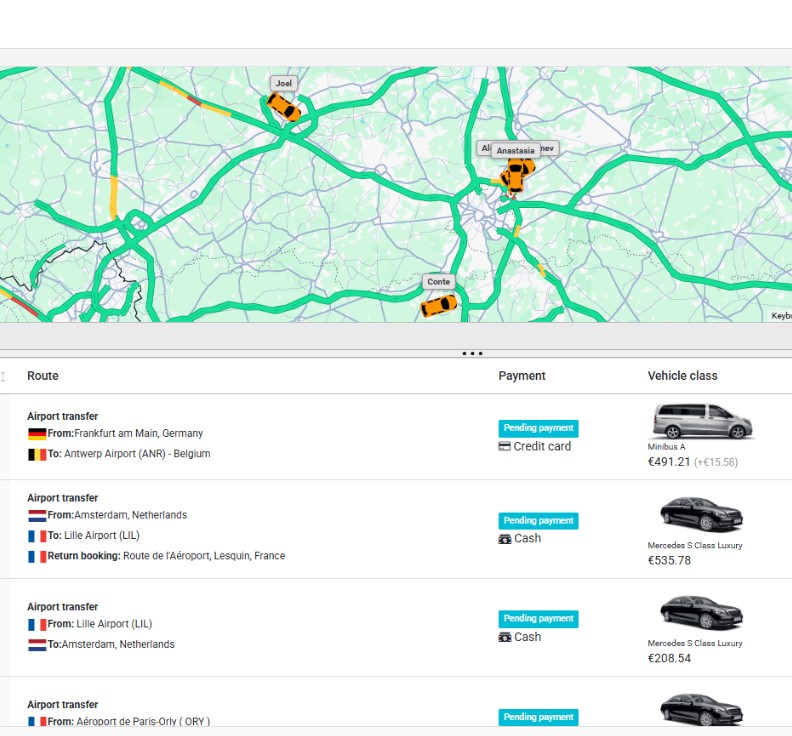
The Corporate Client Wants 8 Vehicles. You Have 5 Available.
A corporate travel manager in Antwerp sends you a request on a Thursday afternoon: 8 vehicles, airport transfers between Brussels Airport and their office park, across four days. You run 12 cars. Six are already committed for that period. You could cover part of the booking – but not all of it.
So you call a colleague you’ve worked with a few times. He has capacity. The arrangement takes 15 minutes over the phone, a follow-up message with the schedule, and a WhatsApp thread that will accumulate 30-something messages over the next week. His drivers take the jobs. The passenger receives a confirmation from your company. The vehicle that arrives belongs to a different operation, under a different name.
That’s the arrangement most airport transfer operators in Belgium, Germany, and the Netherlands are using right now.
It works. Until it doesn’t.
For context on what options become available as your fleet grows, see: Why Transfer Companies with 10+ Vehicles Need Dispatch Software to Automate Driver Scheduling
Table of Contents
- Why Informal Partner Arrangements Break Down
- What Brand Control Actually Means in a Partner Network
- What a Structured Partner Network Looks Like
- How CodiCo’s Partner Network Works in Practice
- Pricing Between Partners: Who Sets What
- What Operators Get Wrong When Building a Network
- A Partner Network Is a Growth Strategy, Not a Fallback
Why Informal Partner Arrangements Break Down
Here’s a situation that happens regularly. A passenger booked an airport pickup through your website. Twenty minutes before the scheduled pickup time, she texts asking where her driver is. You don’t know – the job was passed to your partner two days ago, and you have no visibility into it. You call the partner. No answer. You call the driver directly, reach him mid-route to a different pickup. The passenger waits at arrivals for 14 minutes. She calls you, not the partner. The complaint goes to your company.
The partner may be perfectly reliable. The problem is simpler: once the booking moves into phone calls and WhatsApp, your dispatcher can no longer see what is actually happening.
Pricing becomes the next problem. One operator remembers an agreed fixed rate; the other calculates the trip by distance, and the difference only appears when the invoice arrives. Your driver finishes a drop-off at Amsterdam Airport and heads back to the city empty, while your partner has a pickup at the same terminal 25 minutes later. Neither of you knew. That’s 50 kilometres of dead mileage that a connected system would have caught.
Informal partner networks work fine at low volume, when both operators know each other well and the stakes per job are manageable. When the volume grows – 5 shared jobs a week, then 15, then a recurring corporate contract – the arrangement doesn’t just become harder. It becomes a different kind of problem entirely.
The solution isn’t to stop working with partners.
What Brand Control Actually Means in a Partner Network
Brand control in this context isn’t about logos or colour schemes.
Your passenger booked through your website. They have your confirmation email. They have your phone number. When something doesn’t go as expected, they contact you – not whoever physically drove the car. That’s the exposure: a partner executes the trip, but the reputation consequence lands with you.
The partner’s vehicle does not need to look identical to yours. What matters is that the passenger still receives accurate information from the company they booked with, and that your dispatcher can answer when something changes.
That means the booking, the confirmation, and the communication flow all run through your platform – regardless of which company provides the driver.
What a Structured Partner Network Looks Like
You can still call a trusted operator and ask them to cover two vehicles. In a structured network, however, the booking does not disappear from your operation after they agree to take it.
Before a single shared job is dispatched, two things are in place: a shared dispatch ecosystem and pre-agreed pricing. Both operators work within the same platform. Your partner receives job assignments through the system – with full booking details, passenger information, and routing. Trip status, pickup confirmation, and completion all return to you in real time. There’s no phone call to check if the driver left on time.
Pre-agreed pricing means exactly that: your partner sets their rates for specific routes or zones before the first job moves. When you dispatch a shared booking, the commercial terms are already settled. Nothing to negotiate afterward.
The effect for the passenger is consistent. They receive the same confirmation, the same communication flow they’d get on any booking through your company. The fact that a different operator’s driver physically completed the trip is an internal operational detail – not something that touches their experience.
How CodiCo’s Partner Network Works in Practice
CodiCo’s partner network is built into the dispatch platform – not added on top of it.
Partner companies are registered directly within your CodiCo system. Each company gets its own account – they can see their own bookings, set their own prices, manage their drivers – but it all happens inside the same platform you’re managing. Before any shared bookings start, you configure which service areas use company pricing, and each partner enters their rates for the routes and zones they cover. Those prices are in the system before the first job moves – no rate discussions after the fact. For more detail on how this pricing configuration works, see CodiCo’s pricing settings.
From there, automated dispatch handles the routing. When a booking comes in for a zone where multiple companies operate, the system calculates which company offers the best rate and routes the booking to them first. If they accept, they assign the driver from their own company profile. If they decline or don’t respond, the booking goes to the other companies in that zone.
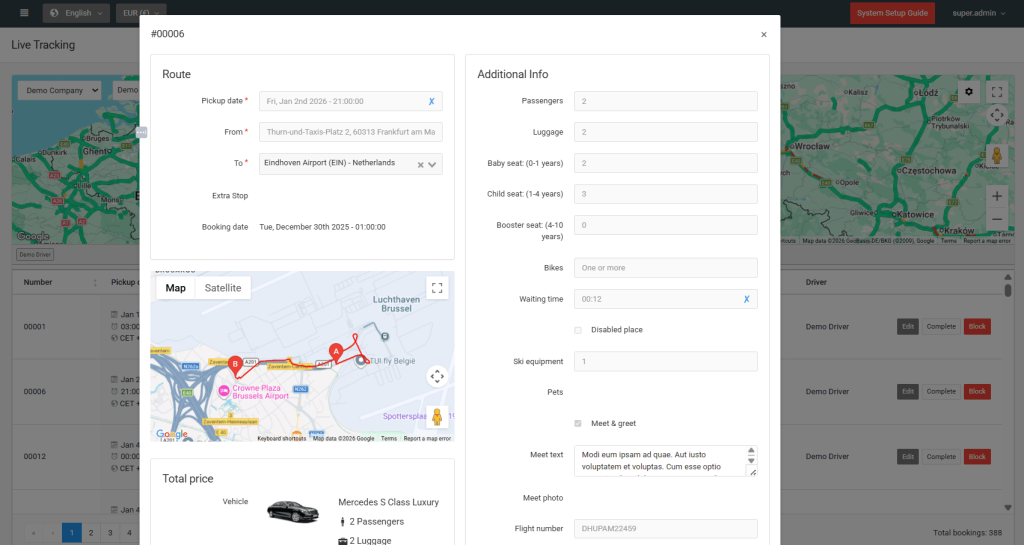
What the administrator retains throughout: full visibility. CodiCo’s live tracking module shows every active driver on a live map in real time – your own drivers and partner company drivers alike. You can see which order each driver is on, where they are, and what’s happening across your entire operation at any moment. That’s what changes the complaint scenario from the start of this article: when the passenger calls, you can see exactly where the driver is.
Settlement is automated. The Total Commissions section tracks what each company has earned and what’s owed. When it’s time to reconcile, you generate an invoice from the platform – the commercial record is already there, based on completed bookings and pre-agreed rates.
📱 Watch: Connect Your Partner Network with CodiCo Dispatch Software
📱 Watch: Companies Prices – How Your Partners Can Add Their Prices
Pricing Between Partners: Who Sets What
This is the area operators find most uncertain when moving from informal to structured arrangements, so it’s worth being direct.
Your partner sets their prices for the services they provide – by route, zone, or vehicle type – and enters them directly into the system. You see those prices before any job is assigned. You decide, based on those rates and your own margin requirements, which jobs to route to which partner.
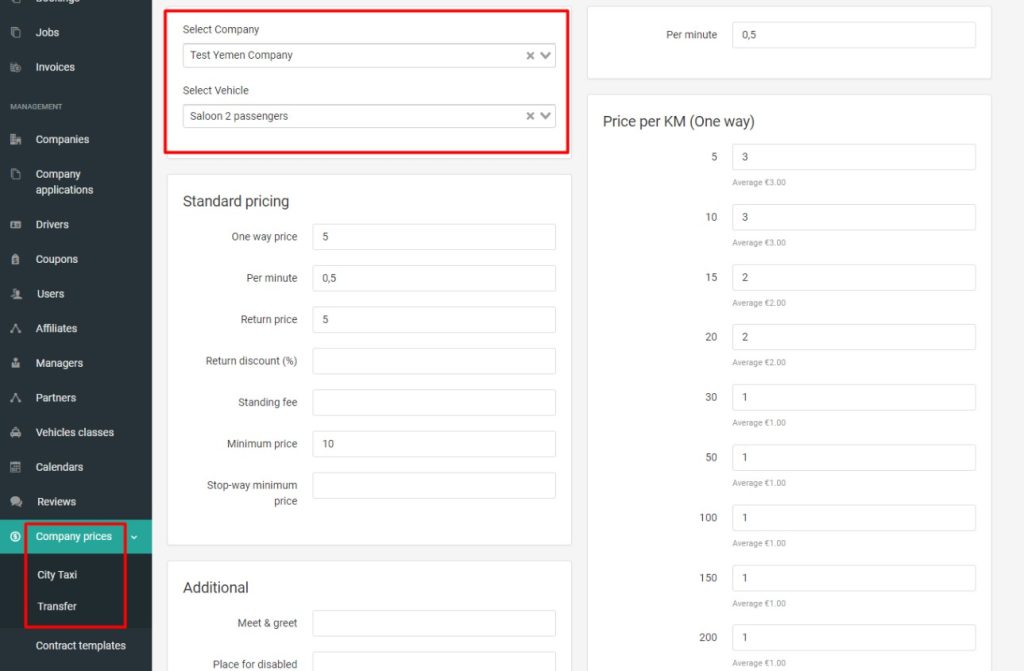
From the passenger’s perspective, nothing changes. They see the price your company quoted at booking. The partner rate is an internal commercial arrangement, completely separate from what the customer pays. The platform handles the separation automatically.
Because the partner rate is recorded before dispatch, reconciliation later is based on the bookings and prices already in the system – rather than on two different versions of a phone conversation.
What Operators Get Wrong When Building a Network
They build it when they urgently need it. A corporate client requests more capacity than the operator can cover, and suddenly they’re trying to connect partners, agree rates, and test the setup in the same week the booking starts. That’s the worst possible time to build infrastructure. Partners selected under time pressure may not be the right partners. Rates agreed quickly tend to cause problems later. And the first shared jobs – with a real corporate client watching, are not the right jobs for testing a new arrangement.
The operators running effective partner networks set them up during quiet periods. When there’s time to evaluate potential partners, configure pricing carefully, and run a few low-stakes shared jobs before anything important is on the line. That’s not a minor operational point. It’s the difference between a partner network that holds up under pressure and one that creates its own problems during peak season.
They mix systems. One partner on CodiCo, another on a spreadsheet, a third managed via WhatsApp. The moment a job leaves your platform, you lose visibility. A structured network requires all active partners to operate inside the same ecosystem – otherwise the core problem of informal arrangements remains, just with different tools around it.
They skip pre-agreed pricing. Every pricing conversation that happens after a job is completed is a potential dispute. The system makes it possible to settle rates before the first shared booking. It should be non-negotiable.
Partner networks also directly address one of the most expensive recurring costs in airport transfer operations, the empty return trip. When your driver drops a passenger at Brussels Airport and heads back to the city, a connected partner with a pickup at the same terminal can fill that return slot. For a detailed look at how this works financially, see: How to Eliminate Dead Mileage in Airport Transfer Fleet Management
A Partner Network Is a Growth Strategy, Not a Fallback
Operators who prepare their partner capacity in advance can accept larger bookings with confidence, while competitors limited to their own vehicles still have to decline them.
An operator running 12 vehicles who builds his partner network through CodiCo can quote 20 vehicles to a corporate client and mean it — because the partners are already in the system, their pricing is already configured, and the jobs route automatically when his own fleet hits capacity. That additional capacity comes from verified partners already connected and priced in the system, rather than from purchasing vehicles that may only be fully used during peak periods.
It’s a different kind of business. The operator with 12 vehicles who can reliably deliver 20 is competing for a different tier of contracts than the operator who can only say yes to what his own cars can physically cover. Corporate travel managers in Belgium and the Netherlands running regular airport transfer programmes don’t want to manage three vendor relationships. They want one operator who can cover the volume consistently.
The operators who figure this out before they need it gain something straightforward: the ability to say yes to things their competitors have to turn down. For a closer look at how this translates to measurable revenue impact, this is worth reading: Revenue Strategies: Increase Your Taxi Fleet’s Profit by 30% Without Hiring More Drivers
Ready to Build Your Partner Network?
CodiCo gives airport transfer operators the infrastructure to build and manage a partner network without giving up brand control, dispatch visibility, or commercial clarity. Connect trusted partners, configure agreed rates before the first shared job, track every driver in real time, and take on contracts your own fleet can’t cover alone.
View CodiCo pricing plans — 7-day free trial, no contracts, no hidden fees.