

 Subscribe
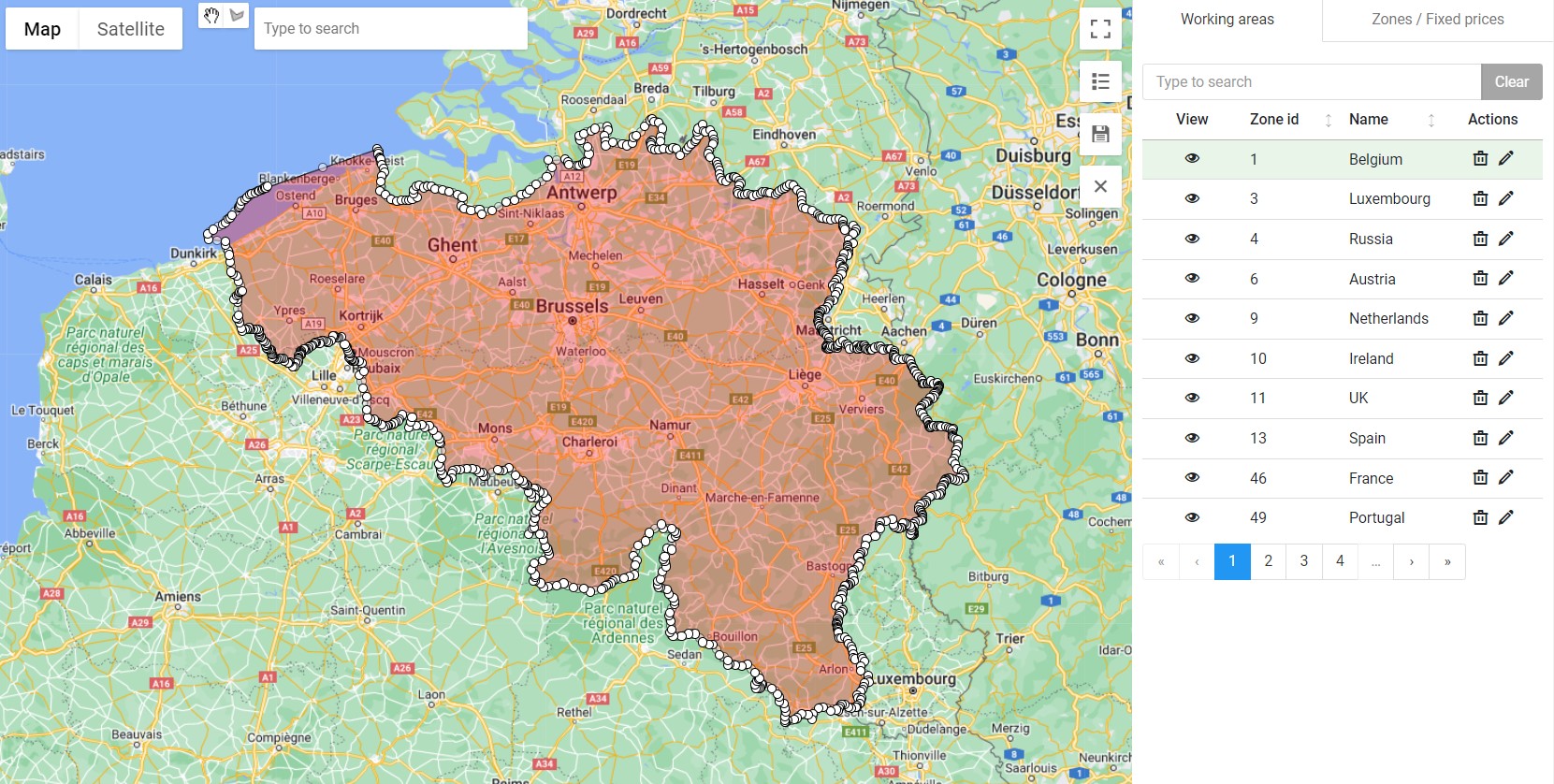
Table of Contents
- Why Cross-Border Routes Catch Operators Off Guard
- The Foundation: Separate Divisions for Each Country
- Pricing Cross-Border Routes: Fixed Rates and Built-In Tolls
- The Language Setup: Booking Form, Admin, and Translations
- VAT Across Borders – What Your Dispatch System Handles (and What It Doesn’t)
- Building Cross-Border Capacity Without a Fleet in Every Country
- How Your Dispatch System Handles Multi-Country Operations
- The Business Case for Getting This Right
An operator in Ghent runs 12 vehicles, two dispatchers, and a steady flow of airport transfers between Brussels, Antwerp, and the coast. A logistics firm calls asking for a weekly contract: Brussels Airport pickups routed to a Paris office, plus the return legs. Fixed schedule, 8 to 12 trips per month, reliable volume. He says he needs to think it over.
The problem isn’t the demand or the capacity. It’s that he has no clean way to quote the route, no structure for invoicing in a cross-border context, and no driver at the French end. Six months later, a competitor is running that contract – not because they had a bigger fleet, but because they had a clearer operational model.
Cross-border airport transfers are not a niche for operators positioned in Belgium, the Netherlands, Luxembourg, or northern France. International routes are a natural extension of what most already do. What holds operators back is rarely demand – it’s the absence of a structured approach to pricing, billing, and service delivery across country lines.
Why Cross-Border Routes Catch Operators Off Guard
Running a transfer from Brussels Airport to the city centre is a known quantity. Distance is predictable, pricing is set, the operational rhythm is established. A transfer from Brussels to Lille or Paris CDG is longer, crosses a border, involves tolls on French motorways, and lands the operator in a different regulatory and tax context than the one they’re used to.
None of this is unmanageable. But it catches operators without a ready model: the rate gets estimated loosely rather than set in advance, the toll cost isn’t factored in consistently, and the invoice goes out in a format that doesn’t match what a French finance department expects. Margin erodes – not from a single failure but from accumulated pricing uncertainty and operational friction on each trip.
For context on how route structure affects profitability more broadly: How to Eliminate Dead Mileage in Airport Transfer Fleet Management
The Foundation: Separate Divisions for Each Country
Create a separate division for each country – not one extended zone structure that covers both. This keeps pricing rules, vehicle classes, driver assignments, and airport configurations clean per market without the two interfering with each other.
With separate divisions for Belgium and France, the Belgian division runs as it always has. The French division carries its own setup: routes, rates, drivers, and partner companies suited to that market.
CodiCo’s zone management documentation makes the guidance explicit: “Create separate divisions for each individual country instead of trying to merge many different countries into one division. This can be inconvenient for administering zones later on.” Within each division, you draw the zones that reflect how your service actually operates – a Brussels zone, an Antwerp zone, a border corridor zone in the division for Belgium; a Paris zone and a Lille zone in the division for France.
The division setup also determines which airports are mapped to which operations, which companies and drivers are active in each area, and how partner capacity is allocated. Cross-border trips that start in Belgium and end in France don’t require a special configuration between divisions – the zone-to-zone pricing system connects them at the pricing level.
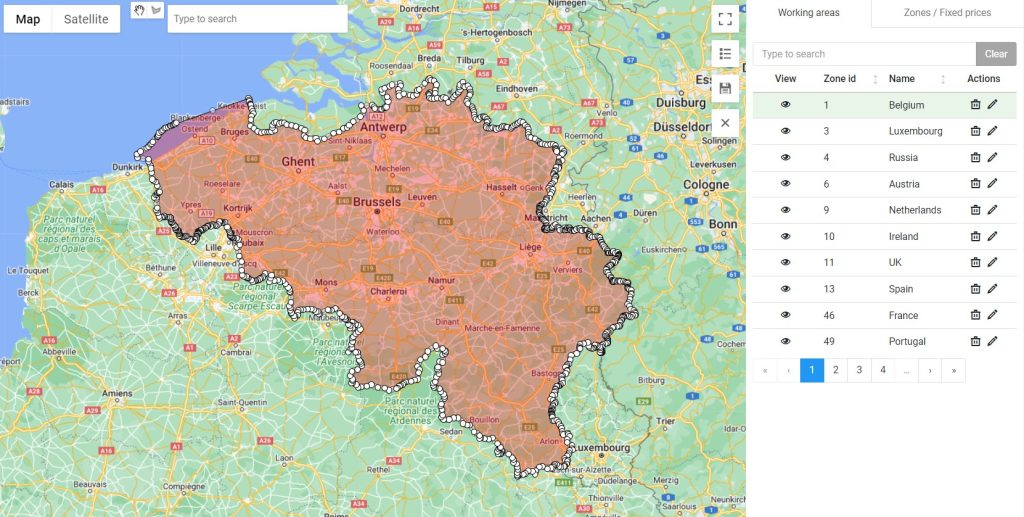
📺 Watch: Custom Zones and Smart Pricing – CodiCo
Pricing Cross-Border Routes: Fixed Rates and Built-In Tolls
Set a fixed zone-to-zone price and build motorway tolls into it upfront – not as a passenger-facing extra, and not absorbed silently trip by trip. An operator quoting €180 Brussels-to-Lille who absorbs €20 in French motorway tolls per booking loses €800/month on 40 trips without ever tracking the gap.
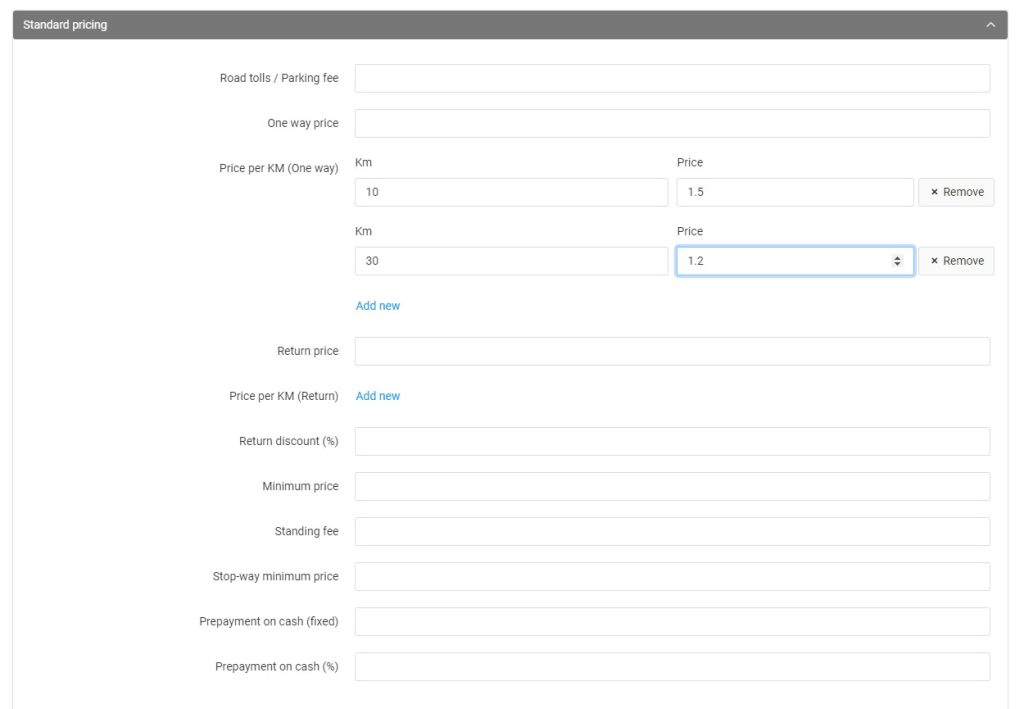
CodiCo’s zone-to-zone pricing lets you configure a fixed price between any two zones – Belgium zone to France zone, Brussels Airport zone to Lille zone, and so on. Within that configuration there’s a Road tolls field: a fixed sum that gets added automatically to the total trip cost. Rather than charging tolls as a separate line or hoping drivers track them consistently, the operator sets the expected toll amount per route once, and it’s reflected in every booking from that point on.
The rate structure also supports bidirectional pricing (same rate both ways, or different rates for outbound and return legs), a return discount percentage, day/night pricing per zone pair, and a minimum fare. A priority system handles overlapping zones – useful when you have general Belgium pricing but a different rate specifically for Brussels Airport departures. The airport-zone rate takes priority over the wider Belgium rate without requiring manual overrides on individual bookings.
The commercial result: a corporate client booking Brussels → Paris CDG gets a consistent €280 every time, with tolls already reflected in that figure. Finance knows what to budget for. The operator knows the margin on every trip. Nobody is recalculating at invoice time.
For an overview of the pricing infrastructure: CodiCo’s pricing system
The Language Setup: Booking Form, Admin, and Translations
CodiCo’s booking form displays in the client’s browser language automatically – no configuration needed from the operator. A French-speaking client in Lille gets a French form; a Dutch-speaking client gets Dutch. No separate booking pages per language to maintain.
The admin interface has a Language Switcher at the top of the panel. Dispatchers work in their preferred language without affecting what clients see. A dispatcher in Ghent working in Dutch can manage a French-language booking without the Paris client noticing any difference.
The Translations module gives operators control over every text string in the system – field labels, confirmation messages, status notifications – across all configured languages. A confirmation email going to a German corporate travel manager can match the exact phrasing her colleagues receive, in German, without the operator managing a separate email template. Languages can be exported for batch review.
The Language and Division Switcher also controls the country context the dispatcher sees at any moment. Switching to the France division shows only the companies, drivers, pricing, and routes configured for France. An “All Bookings” view across all divisions is available when the dispatcher needs the combined picture.

📺 Watch: Language & Division Switcher – CodiCo
VAT Across Borders – What Your Dispatch System Handles (and What It Doesn’t)
CodiCo does not automatically determine the applicable VAT rate based on the country a route passes through. The rate is set manually by the administrator at the company level – and that determination requires an accountant, not a software setting.
VAT for cross-border passenger transport varies by member state, service type, and buyer status. The EU’s ViDA package, already adopted, introduces further changes from 2027. For operators running Belgium-to-France or Belgium-to-Netherlands routes, the applicable rate per route type is a tax question, not a configuration question.
The practical step: consult an accountant familiar with cross-border transport before the first invoice goes out. Once the correct rate is established, the admin enters it in the system and it applies consistently across all bookings, invoices, and reports from that point on.
For operators running corporate accounts across borders, the invoice format and VAT presentation also need to meet what the client’s finance team expects: How to Win Corporate Airport Transfer Contracts
Building Cross-Border Capacity Without a Fleet in Every Country
A transfer from Belgium to France that starts at Charles de Gaulle Airport creates a straightforward capacity problem: the operator needs a driver available at the Paris end, not at the Brussels end. Running a second fleet in France to cover this isn’t practical for most operators in the 3-to-20 vehicle range.
The practical solution is a partner network. A transport company in northern France, connected to your dispatch system, receives and executes bookings at the French end. The original booking remains in your system, the client communicates through your brand, and the partner handles local execution. The operator retains the account relationship and booking visibility without maintaining a physical presence in the second country.
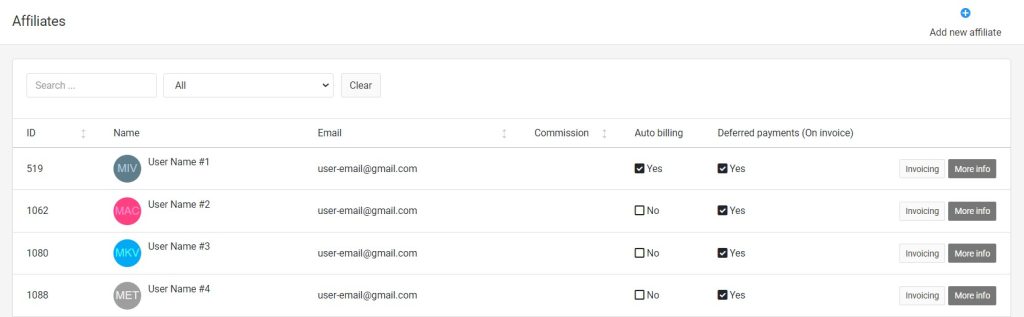
CodiCo’s partner network lets operators connect external transport companies as partners with their own vehicle capacity. Partners are configured by location, vehicle type, and airport coverage; orders route to them based on rules the administrator sets, not distributed arbitrarily. Commission is tracked automatically per completed order.
For a detailed look at how partner relationships work and what the operator retains control over: How to Build an Airport Transfer Partner Network Without Losing Control of Your Brand
How Your Dispatch System Handles Multi-Country Operations
CodiCo’s Division Switcher lets a two-dispatcher team manage Belgian and French operations from one admin panel – without building or maintaining separate systems for each market. The dispatcher switches between Belgium and France views using the switcher at the top of the panel.
Each division shows only the companies, drivers, airports, pricing, and partners configured for that country. A change to French zone pricing doesn’t touch the Belgian configuration. When the dispatcher needs the combined view across all active divisions, the “All Bookings” option is available without switching contexts manually.
Automated dispatch assigns bookings to drivers and partners based on the rules configured per division. A cross-border trip from Brussels Airport to Lille routes through the Belgium-side configuration for the pickup, with the France-side partner handling the destination end according to that division’s setup. Manual override is available when a situation requires a dispatcher decision rather than automated assignment.
The practical effect is that a two-dispatcher operation manages Belgian and French routes from the same interface, with the same booking flow and the same reporting view, without building or managing a separate system for each market.
The Business Case for Getting This Right
An operator who declines the Brussels-to-Paris contract because the pricing model isn’t ready and the operational structure doesn’t exist isn’t making a permanent decision – but the window doesn’t stay open indefinitely. A competitor who has structured for cross-border takes that account. Reapproaching the client later is harder than not having declined in the first place.
The structural work to get cross-border operations functional isn’t extensive. Separate divisions for each country, fixed zone pricing with tolls built into the route figures, a booking form that handles language automatically, and a partner at the other end to cover local execution – those four elements close most of the operational gaps for EU cross-border routes. The VAT question requires external input, but it doesn’t delay the commercial setup; it’s a one-time task with ongoing payoff.
Operators in Belgium, the Netherlands, Luxembourg, and northern Germany are geographically positioned to serve multiple major airport markets – Brussels, Amsterdam Schiphol, Düsseldorf, CDG, Frankfurt — without the volume any single route would need to justify a dedicated second fleet. A structured cross-border model makes that demand accessible rather than something to pass on to a competitor.
CodiCo provides the airport transfer management infrastructure to run multi-country operations from a single system: per-country zone configuration, fixed pricing with built-in route costs, multilingual booking, partner network for cross-border capacity, and automated dispatch across divisions.
View CodiCo pricing plans – 7-day free trial, no contracts.