


 Subscribe

Local taxi companies are not losing customers only because of price. In many cases, the real issue is trust. People are now used to booking a ride in a few taps, seeing the fare in advance, getting instant confirmation, checking driver details, and feeling that everything is already arranged before the car even arrives.
But this does not mean every local operator has to become another Uber, Bolt, or copy of modern ride-hailing apps. Many taxi companies already have advantages that large platforms often lack: real local knowledge, loyal customers, airport experience, hotel partnerships, and a more personal way of handling each ride. The problem is that these strengths are not always visible when a customer is deciding whether to book.
If the website looks outdated, the price is unclear, the reply comes too late, or the customer has to call just to check whether the booking is confirmed, trust starts to break down. And when that happens, even a good local taxi service can look less reliable than it really is.
This article explains how local operatons can build trust in the ride-hailing era without becoming a copy of big mobility apps. The goal is simple: make the service feel clear, professional, and dependable from the first click to the completed ride.
Why Trust Has Become a Key Advantage for Local Taxi Companies
The taxi market has changed because customers now compare every ride with the digital habits they already know. They may not say it directly, but they notice the details very fast: can I book now, can I see the price, will someone confirm it, do I understand what happens next?
As the global ride-hailing market continues to grow, these expectations become normal. A customer who uses app-based transport in one city often expects the same level of clarity when booking a local taxi, airport transfer, or private hire ride somewhere else.
This is where local taxi companies have both a problem and an opportunity. The problem is that old booking habits can make even a reliable company look outdated. A slow reply, a vague price, or a booking that needs two phone calls to confirm can create doubt before the ride even starts.
The opportunity is simple: trust is not owned by big apps. A local operator can build it too, sometimes even better, if the customer feels informed and safe. Clear service pages, simple booking steps, honest pricing, visible contact details, and proper confirmations can make a smaller taxi company look serious from the first visit.
In this market, customer trust is not only about reputation after the ride. It starts much earlier, when the customer is still deciding whether to book or leave the website.
Related Article: Ride-sharing vs Ride-hailing: Understand the Real Difference and Why It Truly Matters
What Makes Customers Trust Ride-Hailing Apps So Quickly
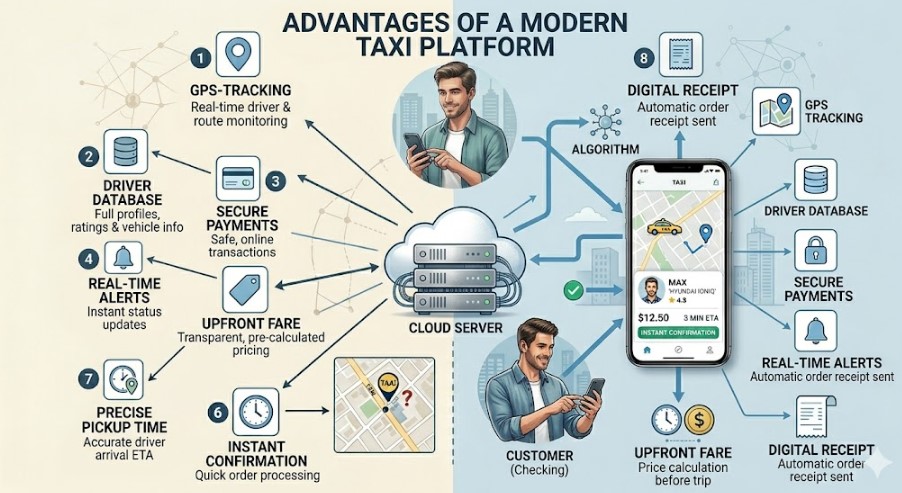
People do not trust ride-hailing apps only because they are famous. They trust them because the process feels predictable. The customer opens the app, enters the route, sees the price or estimate, confirms the ride, and gets updates without having to chase anyone.
For many passengers, that feeling of control matters more than they realise. They do not want to wonder if the booking was received. They do not want to call again to ask about the driver. They do not want to hear “we will confirm later” when they are booking an airport ride, a business trip, or a late evening pickup.
Most app-based services build trust through a few simple signals:
- instant booking confirmation after the request is made;
- clear price information before the ride starts;
- driver or vehicle details shared in advance;
- updates when the ride status changes;
- a clear payment and receipt process.
None of these things are magic. They are just small pieces of communication that remove doubt. And this is exactly where local taxi operators can improve. A company does not need to be a global platform to make customers feel informed. It needs to make the next step clear.
Where Local Taxi Companies Can Still Win
Big ride-hailing apps are strong when the ride is simple: open the app, choose a point, wait for the car. But not every trip is that simple. Airport pickups, hotel transfers, business rides, early morning bookings, passengers with luggage, guests who do not know the city — here a local company can be much more useful than a generic platform.
A good local operator knows things an app usually does not explain well. Which terminal entrance is easier for pickup. Where hotel guests normally wait. Which roads become slow after an event. Which area is better to avoid when the city centre is blocked. This knowledge may not look impressive on a landing page, but during the ride it saves time, nerves, and sometimes the whole booking.
There is also a trust factor that comes from familiarity. A regular passenger does not always want a random driver from a large pool. A hotel may prefer a known company that answers properly. A corporate client wants someone who can handle repeated trips, invoices, changes, and special requests without turning every detail into a problem.
So the advantage of local taxi companies is not only “we know the area”. It is the ability to handle rides that need attention. The weak point is that many operators do not show this clearly enough before the customer books. Their real service is better than their online presentation.
That is the gap local taxi companies need to close. Not by pretending to be another global app, but by making their reliability visible earlier: on the website, in the booking process, in confirmations, and in the way they communicate before pickup.
What Makes a Local Taxi Company Look Unreliable Online
A customer can lose trust before the first call. Not because the company is bad, but because the online impression feels unfinished. Maybe the website is old. Maybe the airport transfer page says almost nothing. Maybe the booking form asks for a name and phone number, but gives no idea what happens after sending it.
For local taxi companies, this is a real problem. Many customers search in a hurry. They need a ride to the airport, a pickup after a meeting, or a car for tomorrow morning. They do not want to investigate the company for ten minutes. They want quick signs that the service is real, organised, and safe to book.
Small things create doubt:
- a price that is hidden until someone calls back;
- no clear difference between local rides, airport transfers, and corporate bookings;
- a mobile page where the booking button is hard to find;
- no reviews, company details, or support information;
- a form that sends the request but gives no proper confirmation.
This is where web development becomes more than design. A taxi website has to do a practical job: explain the service, remove doubt, and make the next step obvious. If the first impression feels messy, the customer may never get far enough to discover that the actual ride service is good.
Related Article: Switching from WhatsApp to a Taxi App: Why It’s the Smart Move for Your Business
How a Better Booking Experience Builds Confidence
The booking step is where trust either grows or disappears. A customer may like the company, read the service page, maybe even check the reviews. But if the booking process feels unclear, too long, or too manual, doubt comes back quickly.
A good taxi booking flow should not make the passenger think too much. They need to understand what to enter, what they will receive, and whether the ride is actually confirmed. For airport transfers and scheduled rides, this becomes even more important because the customer is not booking “maybe”. They are planning around a flight, a meeting, or a fixed pickup time.
| Trust signal | What the customer expects | What a local taxi company should provide |
|---|---|---|
| Booking confirmation | To know the request was received | Automatic confirmation by email, SMS, or WhatsApp |
| Price clarity | To avoid surprise costs | Fixed fare, zone price, or clear pricing logic |
| Ride details | To check date, time, pickup, and destination | A clear booking summary before and after submission |
| Driver communication | To know how pickup will happen | Driver details or pickup instructions when available |
This is where UI/UX design has a direct effect on bookings. It is not only about making the page look nice. It is about removing friction: fewer confusing steps, better field labels, clear buttons, mobile-friendly forms, and simple messages after the customer sends a request.
When the booking process feels calm and predictable, the company feels more reliable too. The customer may not notice every design decision, but they do notice when the process is easy.
How Taxi Dispatch Software Makes Local Operators More Reliable
Trust also depends on what happens behind the screen. A clean booking form is good, but it is not enough if requests are still copied into a notebook, passed to drivers by phone, or confirmed manually when someone finally has time.
This is where taxi dispatch software becomes important for local operators. It helps connect the booking, the dispatcher, the driver, and the customer in one place. The customer does not need to know every detail of the system. They only feel the result: faster confirmation, fewer mistakes, clearer updates, and a ride that feels properly organised.
For example, when a customer books an airport transfer, the company should not be searching through messages to find the pickup time or flight number. The ride details should already be stored, visible, and ready for the dispatcher or driver. Same with corporate bookings, hotel pickups, or pre-booked local rides.
A reliable dispatch setup can help with:
- keeping all booking details in one system;
- assigning the right driver without confusion;
- tracking ride status from request to completion;
- sending clearer updates to passengers;
- reducing missed bookings caused by manual work.
For the customer, this does not feel like “software”. It feels like the company knows what it is doing.
Building Trust with Repeat, Airport, and Corporate Clients
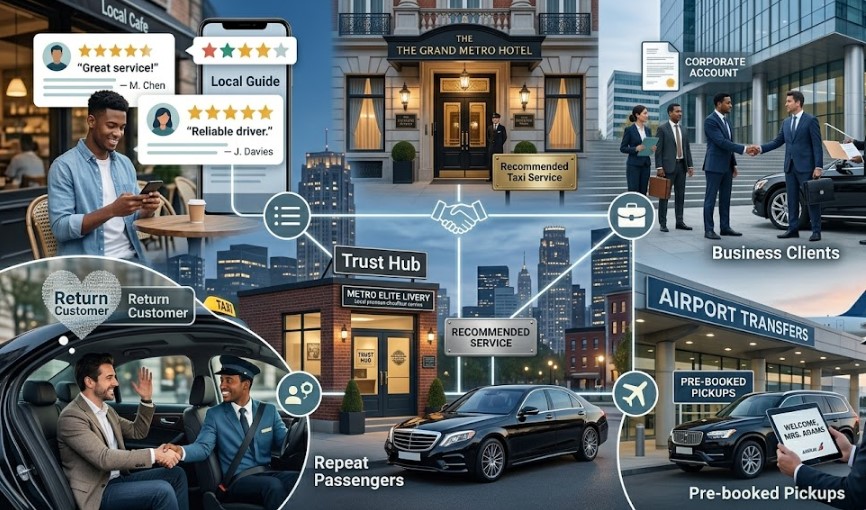
Some rides are not just “one more taxi order”. A regular passenger, a hotel guest, an airport transfer customer, or a corporate client expects a different level of care. They may book more than once, ask for invoices, change pickup times, request the same vehicle type, or need the company to remember small details from previous trips.
If all this information lives only in messages, calls, or one dispatcher’s memory, the service becomes fragile. It may work while the same person is handling everything, but it gets harder when the team grows, drivers change, or bookings come from several channels at once.
This is where CRM systems can support trust in a very practical way. They help a taxi company keep customer details, booking history, partner accounts, notes, and follow-ups in one place. Not every small operator needs a complex setup, but every growing company needs some way to stop valuable client information from getting lost.
For passengers and partners, this feels like better service. The company remembers them, handles repeat bookings faster, and looks more professional when dealing with airports, hotels, and business clients.
Related Article: Web Booking Widget vs Full Booking Portal: Differences, Benefits, and Use Cases
Why Reviews and Local Reputation Still Matter
Digital tools can make the booking process easier, but they do not replace reputation. For local taxi companies, trust often starts before the customer enters pickup and destination details. People want to see proof that the company is real, active, and already trusted by other passengers.
This is where reviews and local reputation become important. Ride-hailing apps usually build confidence through ratings inside the platform. Local operators need to show trust in a different way:
- Recent customer reviews show that the company is active and still providing reliable service.
- Google ratings help passengers quickly understand how other customers rate punctuality, safety, and communication.
- Hotel or business partnerships make the company look more established in the local market.
- Clear company details show that the operator is real, reachable, and not just a random booking form.
- Testimonials from repeat clients prove that people use the service more than once, not only for one-time rides.
- Local airport and city knowledge gives customers confidence that the company can handle pickups, delays, luggage, and fixed-time rides properly.
For many passengers, these signals matter as much as price. A cheaper ride can still feel risky if the company has no reviews, no visible contact details, and no proof of local experience. On the other hand, a taxi company with strong reviews, clear service information, and visible local presence can feel safer before the booking is even made.
This is one area where local operators can compete with large platforms. Big apps are convenient, but they often feel anonymous. A local company can build a more personal kind of trust by showing real feedback, real partnerships, and real experience in the area.
The goal is not to overload the website with every review or partner logo. The goal is to make the strongest trust signals easy to see. When customers notice recent reviews, clear company information, and proof of local reliability, they are more likely to book directly instead of opening another app.
How AI Can Support Faster and Clearer Communication
Trust is often lost in the waiting time. A customer sends a question, asks about price, wants to change the pickup time, or needs to know if a child seat is available. If the answer comes too late, the company may already feel unreliable, even if the ride itself would have been fine.
AI integration can help with this part, but it should not be presented as a magic replacement for dispatchers. In taxi operations, people still matter. What AI can do well is support the first layer of communication: answer common questions, collect basic ride details, sort requests, or help customers outside normal office hours.
For a local taxi company, that can mean fewer missed messages and less pressure on the team. A customer gets a quicker first answer, while the dispatcher can focus on rides that actually need human attention.
The best use of AI is not to make the service feel robotic. It is to make the company easier to reach, especially when the customer only needs a clear, simple answer before booking.
Trust Checklist for Local Taxi Companies
Trust is easier to improve when it is not treated as a vague idea. For a taxi company, it comes down to a few very practical questions. If the customer can understand the service, book without stress, and receive clear information after booking, the company already feels more reliable.
Before investing in more advertising or trying to compete only on price, local operators should check the basics:
- Can a customer understand your main services in less than a minute?
- Can they book a ride without calling first?
- Do they receive a clear confirmation after sending a request?
- Is the price, fixed fare, or pricing logic easy to understand?
- Does the website work properly on mobile?
- Are reviews, company details, and contact options visible?
- Can repeat customers, airport transfers, and corporate rides be managed without losing details?
- Do passengers know what happens after they book?
If several answers are “no”, the company may not have a service problem. It may have a trust problem. And that is easier to fix than many operators think, because most of it starts with clearer communication and a more organised booking process.
Final Thoughts
Local taxi companies do not need to become copies of large ride-hailing apps. That is not the point. Their real strength is often in the parts big platforms cannot handle so personally: local knowledge, airport experience, repeat clients, business accounts, and a more flexible way of solving ride problems.
But customers need to see that strength before they book. If the website feels unclear, the price is vague, or the booking process depends too much on waiting for someone to reply, trust becomes weaker. Even a good service can look unreliable from the outside.
The taxi companies that will stand out are the ones that combine local service with modern expectations: clear information, simple booking, visible confirmations, organised dispatch, and faster communication. Not too complicated. Just enough to make the customer feel that the ride is in safe hands.
FAQ
Why do customers trust ride-hailing apps so quickly?
Because the process feels clear. The customer sees the route, gets a price or estimate, receives confirmation, and usually knows who is coming. That removes a lot of doubt before the ride starts.
How can a small taxi company build trust online?
Start with the basics: a clear website, simple booking steps, visible contact details, real reviews, and confirmation after each request. Customers do not need a perfect system. They need to feel that the company is organised and will actually handle the ride.
Does every local taxi company need taxi dispatch software?
Not every small operator needs a complex setup from day one. But when bookings come from different channels, drivers need better coordination, or customers expect faster confirmations, taxi dispatch software can make the service much easier to manage.
What role does website design play in taxi customer trust?
A website is often the first impression. If it looks outdated, loads badly on mobile, or does not explain the service clearly, customers may leave before they even contact the company. Good design helps the booking feel safer and more professional.
How can AI help taxi companies respond faster?
AI can help answer common questions, collect basic booking details, support customers outside office hours, and reduce missed messages. It works best as support for the team, not as a full replacement for human service.